


Industries · Healthcare · Functional Medicine
Functional Medicine SEO and Website Design
I design websites and handle SEO and local search for independent functional medicine practices and naturopathic clinics. Each site is built to bring in new patients, and I keep it growing after launch.



How patients find a practice
By the time a patient starts searching for a functional medicine practitioner, they've usually already been through the conventional system.
Functional medicine patients have often seen several doctors, had the tests, and been told everything looks normal, even though they still don’t feel well. They want to understand what is going on.
That changes how they search. They start with questions before they look for a provider. Why am I always tired? Why do my labs come back normal when I still feel off? What does functional medicine do differently? They read and compare, and they want to understand a practitioner’s approach before they book.
Search carries more of the load in this specialty. Most functional medicine practices are out-of-network or cash-pay, and Google and Meta restrict or reject ads for bioidentical hormones, many supplements and other treatments common in this field. For most practices, search is the main way new patients find them.

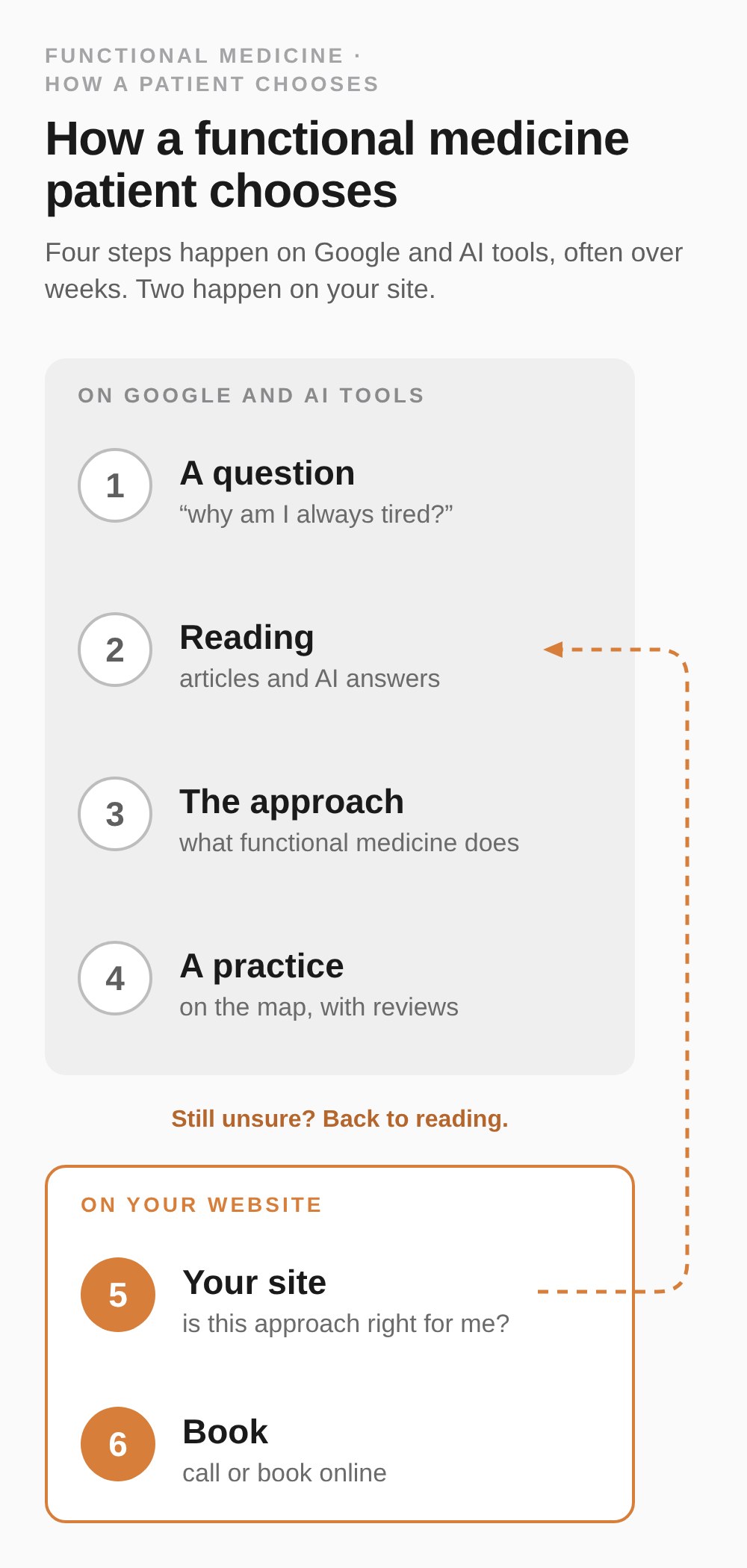
This is why I build a functional medicine site around the questions patients ask.
Who this is for
Functional medicine and naturopathic practices serve the same patients, and the marketing needs are nearly identical.
Functional Medicine Practices
Patients come after conventional care left them without answers. The site has to explain the practice’s approach clearly enough that they recognize what they have been looking for.
Naturopathic Doctors
A distinct profession with nearly the same marketing needs. Patients are looking for a different approach to their health, and they read carefully before they choose a practitioner.
Cash-Pay and Out-of-Network
Patients pay out of pocket and decide for themselves. New patients come from search, word of mouth and recommendations, so the website and search presence carry most of the load.
What a functional medicine practice needs to get right online.
- 01
A website that explains the practice’s approach clearly.
- 02
Pages that answer what patients research before they book.
- 03
A strong place on the Google map when patients are ready.
Functional Medicine Website Design
A functional medicine website has to explain the practice’s philosophy in a way most healthcare sites never have to.
Patients arrive after months or years of frustration. They have been told their labs are normal, that nothing is wrong, or that their symptoms are something they will have to live with. Before they contact anyone, they want to know whether a different approach is worth trusting.
So the site has to answer the questions those patients carry. What does it mean to treat the root cause, not just the symptoms? How does the process work, and what does it cost? What is it like to work with this practitioner? When those answers are clear, the right patients reach out with confidence, and a cash-pay patient can tell before calling whether the practice is right for them.
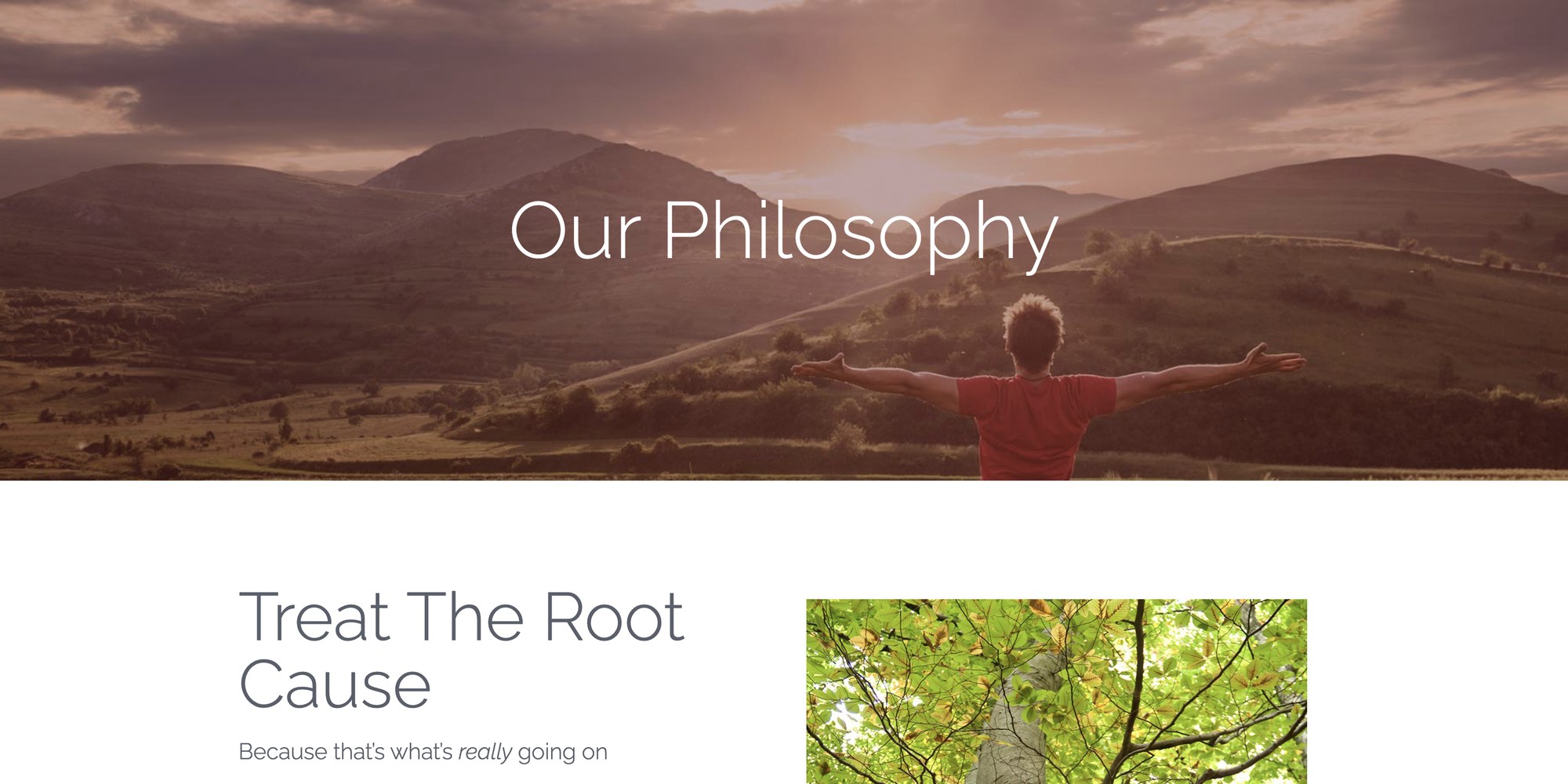
For Optimal Health Institute of Ohio, the philosophy was the project. Dr. Nancy Fazekas Grubb starts with a different question from most doctors: why is this happening? I built the site in 2016 so every page carries that idea, in the writing, in the imagery and in quotes set into the pages. It even has a philosophy page, headed Treat The Root Cause, beside a photograph of a tree with its roots exposed.

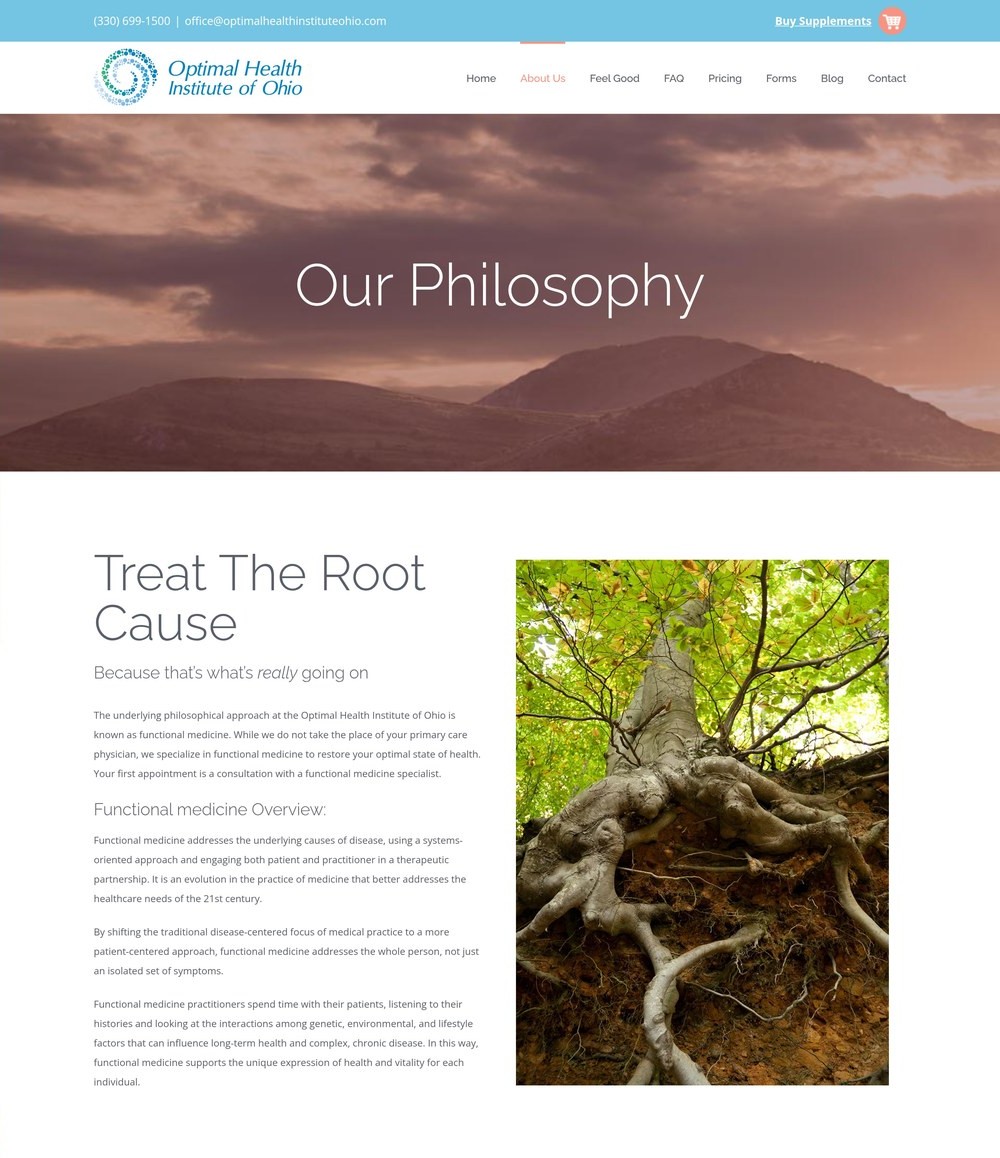
Optimal Health Institute of Ohio’s homepage and philosophy page. See the case study →
The design should feel like the practice. The look of the site, the photography and the words should give patients an accurate sense of the practice before they meet it, including what it values. For most functional medicine practices, that means a site that feels warm and calm, laid out for patients who read carefully, with a clear way to book when they are ready.
Some of the most useful pages on a functional medicine site never show up in Google. A new patient might get a link to intake forms and a health history before the first visit, or to instructions for a lab test. A current patient might get a link to the practice’s store to reorder a supplement. I build these pages along with the rest of the site.
Many functional medicine practices already have a website, so this work often starts as a website redesign. Done carefully, a redesign keeps the Google rankings the old site has earned.
I can build this for you. I plan the site, write the pages and design it myself, so it explains your approach the way you would and feels like your practice.
“From our very first conversation, he was responsive, easy to communicate with, and genuinely interested in understanding our practice and its needs. He immediately demonstrated an ability to appreciate our business from multiple perspectives and translate that understanding into a beautiful, highly functional website.”
Dr. Anita Shane · Ophthalmologist & Founder, Venice Retina
Functional Medicine SEO
Functional medicine SEO starts with the questions patients ask. Searches like “adrenal fatigue treatment,” “bioidentical hormone therapy” or “functional medicine doctor near me” come from people trying to understand their situation, often long before they think about booking.
SEO for functional medicine means being there while patients research. I write the pages around the questions patients ask, in the words they use for their own symptoms, and connect them so a reader can move from a symptom to the practice’s approach to booking. It is the same healthcare SEO work I do for every specialty, shaped here for patients who read everything before they decide.
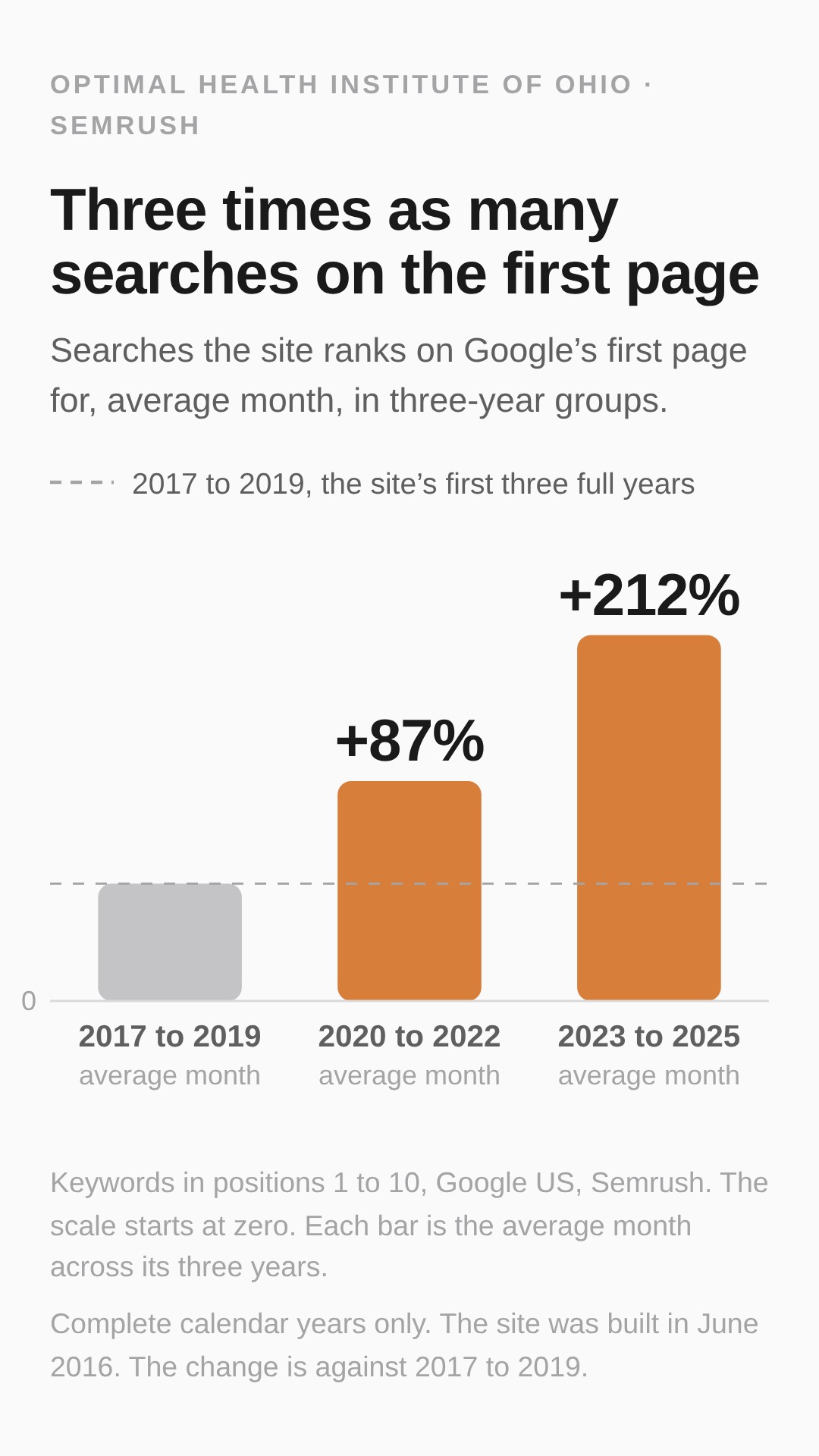
That is how I wrote the Optimal Health Institute of Ohio site. Before writing most of its copy, I read a book on bioidentical hormones and functional medicine that Dr. Grubb gave me. Each treatment page starts where a patient starts. The thyroid page explains what the thyroid does, why a problem with it often gets missed, how she tests for it and what happens next, and after the homepage it is the page people reach most from Google. Today the site shows up for more than 1,000 different Google searches, about 12,000 times a month.

Naturopath SEO works the same way. Naturopathic doctors and functional medicine practitioners serve similar patients and the searches overlap a great deal, so SEO for functional medicine doctors reaches naturopathic patients too.
I research what your patients search for, then write and build the pages that bring them to you, and I keep adding to them as the practice grows.
Local SEO for Functional Medicine Practices
Most functional medicine patients choose a practitioner they can reach. They may read for weeks, but care runs over months, so location matters when it is time to book.
Local SEO puts the practice in front of patients at that moment. When someone searches for a functional medicine doctor, a naturopathic clinic or bioidentical hormones near them, Google shows a map and a short list of practices. Your Google Business Profile is the listing Google shows there, so it needs to be complete and accurate. Google also checks your other listings, which are the pages about your practice on sites like Healthgrades, Yelp and Facebook. Each one shows your name, address, phone number and hours. When they all match each other and your website, Google trusts what it sees, and the practice has a better chance of making that list.
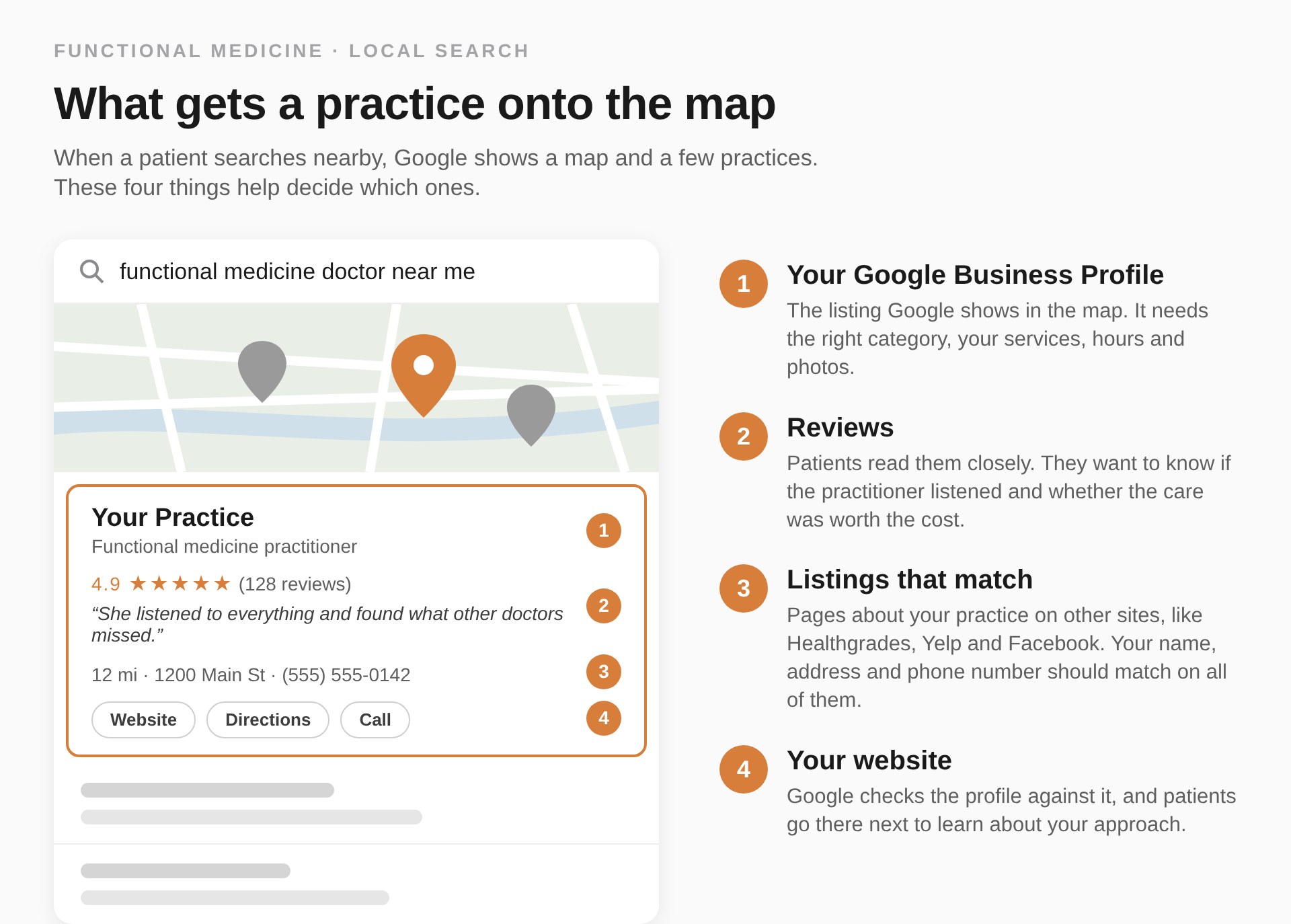
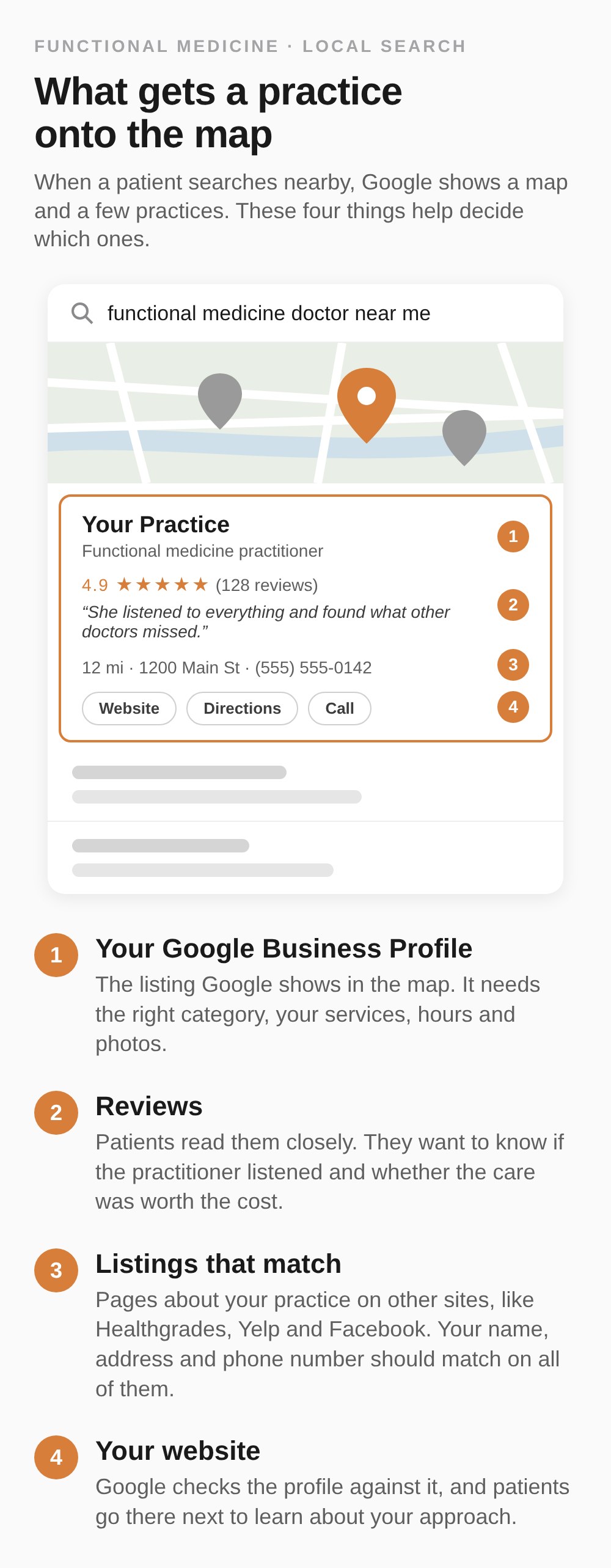
The map comes at the end of a long search, when the patient is ready to choose.
Reviews matter a great deal here. Functional medicine patients read them closely. They want to know whether the practitioner listened, whether the approach felt different, and whether patients like them found it worth the cost. The local SEO page covers profiles, listings and reviews, including how to set up a steady flow of reviews.
For a practice that draws patients from a whole region, the content does much of the work. Optimal Health Institute of Ohio sees patients from Akron, Canton, Cleveland and across northeast Ohio, and its pages are found for searches across that whole area. The map matters most for the patients close by.
I set up and look after all of it for you, from your Google Business Profile and listings to a steady flow of reviews, and I keep it accurate as the practice grows.
Structured Data for Functional Medicine Practices
Structured data is code that states the key facts on your website in a way that’s made for search engines and AI tools to understand. It spells out who you are, where you are and what you treat, so they get those facts right. It is written in a shared language called Schema.org, which Google and Microsoft both read, and AI tools can read too.
For a functional medicine practice, structured data adds up to a map of the whole practice. Patients describe what they feel in their own words, and practitioners describe their approach in theirs. The map ties the two together, connecting the practice, its practitioners, the conditions they treat and the services they offer. People understand a map by looking at it. Search engines and AI tools read this one in code, and it is called a knowledge graph.
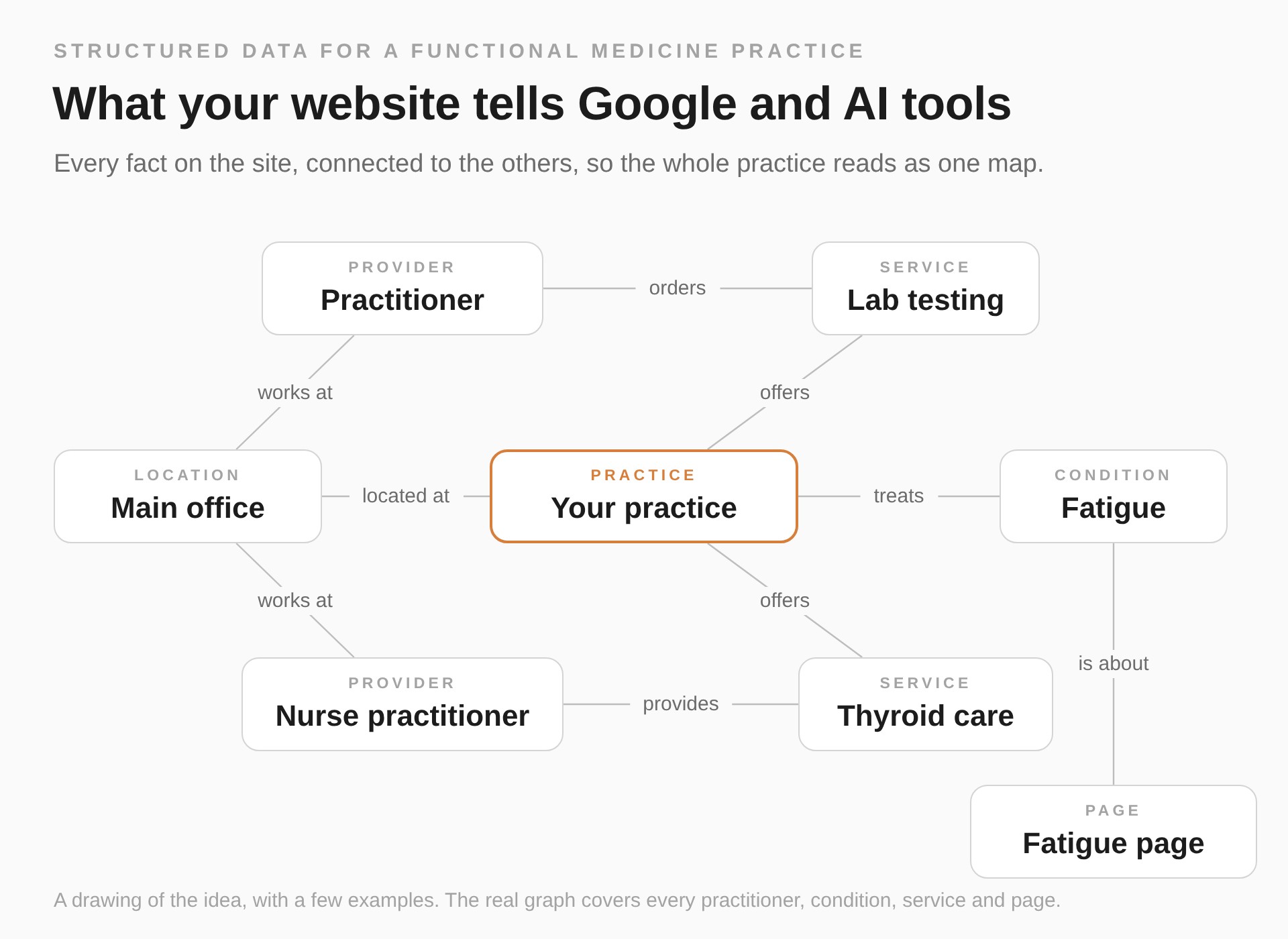

Most functional medicine websites have only basic structured data, usually little more than the practice’s name, address and hours, or none at all. That leaves plenty of room to get ahead. As AI systems get more capable, they will rely more and more on the code behind a website. Every website I build comes with a full knowledge graph, and I keep it current as the practice grows. If you already have a website, I have options for adding one.
AI Visibility for Functional Medicine Practices
Many patients now take their health questions to AI tools like ChatGPT, Claude and Perplexity. Surveys show that about a third of American adults use AI chatbots for health questions. Functional medicine patients ask detailed ones. Why do my labs come back normal when I still feel terrible? What does functional medicine do differently? What kind of practitioner should I see for hormone problems?
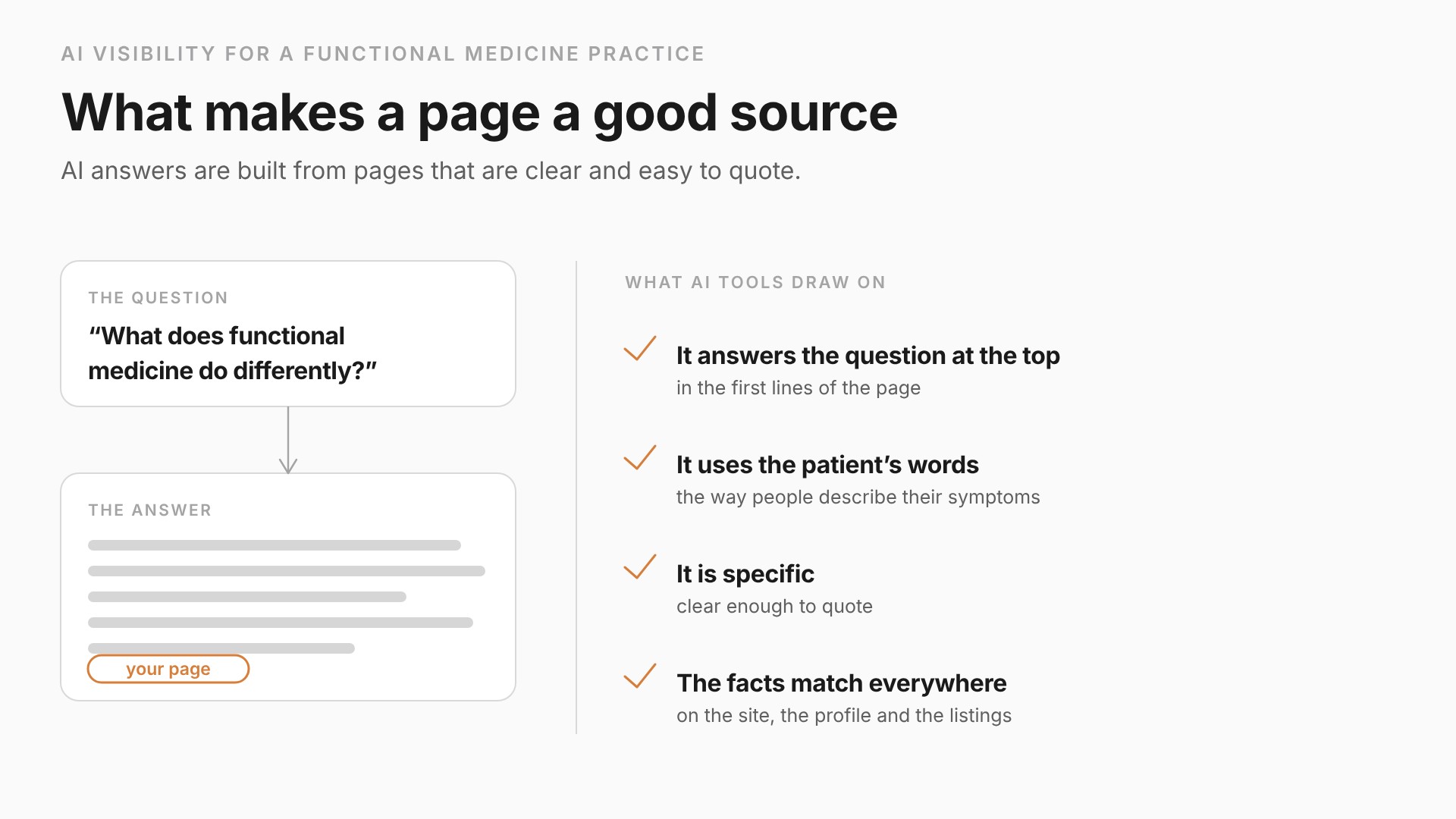
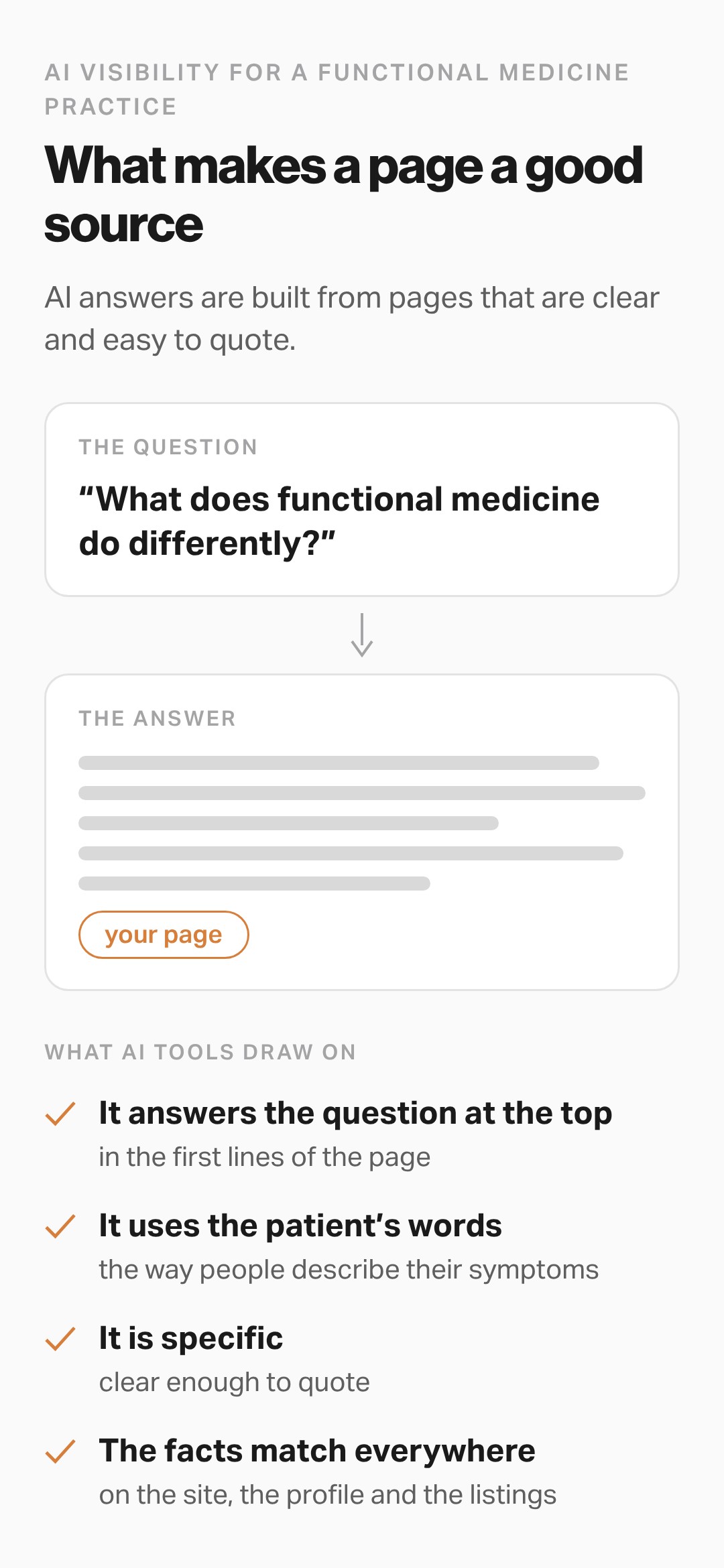
The pages that answer patients’ questions on Google are the same pages AI tools quote.
The big health sites answer most general questions. When someone asks what causes fatigue, AI tools mostly quote places like the Mayo Clinic and Cleveland Clinic. A practice wins when a patient asks for a practitioner nearby. Then AI tools lean on what the practice has written about its approach and the conditions it treats, and on profiles and listings that agree.
Starting early on AI search optimization is an advantage. AI search optimization means working on what these tools draw on: the practice’s pages, reviews, listings and knowledge graph. These tools favor practices that are well established online, and that takes more than the right pages. It takes time for reviews to add up, for other sites to mention the practice, and for search engines and AI tools to come to trust it. A practice that waits can build the same pages later, but it can’t make up that time. A practice that starts now will also be in a much better position as more patients move from Google to AI.
My clients are already named in Google’s AI answers and get visits from ChatGPT and other AI tools. I can do the same work for you as part of your SEO, and I regularly check how ChatGPT, Google’s AI and other tools answer when patients ask about a functional medicine practitioner near you. The AI search optimization page covers how, starting with an AI Visibility Audit.
One Person, Everything Connected
Functional medicine marketing usually gets split among several vendors. One firm builds the website, another does the SEO, and someone else handles the listings. You end up explaining your practice to each of them separately. Because no one sees the whole picture, the details stop matching. A new practitioner shows up on the website but not on the Google listing, or the hours change on the listing but not on the site. Having one person handle all of it is a big advantage, because everything stays consistent. When something changes, one person updates the website, the Google Business Profile and the directory listings together.
For functional medicine practices, that one person is me. I design the site, write the pages, do the SEO and look after the Google Business Profile, so the practice’s approach comes through the same way everywhere a patient finds it.
It also gets better over time. I come to know your practice, your practitioners and how you like things done. You don’t have to explain the background again each time, because I already know it. A short note is enough, and the work gets done.
In this field, good marketing is clear explanation. Many functional medicine practitioners are wary of marketing, and so are their patients. What works is a website that explains the approach plainly and answers patients’ questions well, so the right patients choose the practice for the right reasons. I help show patients who you really are and how you work.
Related
Web design and development
How a site gets structured before it gets designed.
Healthcare SEO
How patients search for care, and the work that answers it.
Local SEO
Getting on the Google map, and staying there.
Optimal Health Institute of Ohio
Built in 2016, and still how patients find the practice.
See my work
Every case study, with the evidence.
Experience in functional medicine
Built in 2016, and still how patients find the practice.
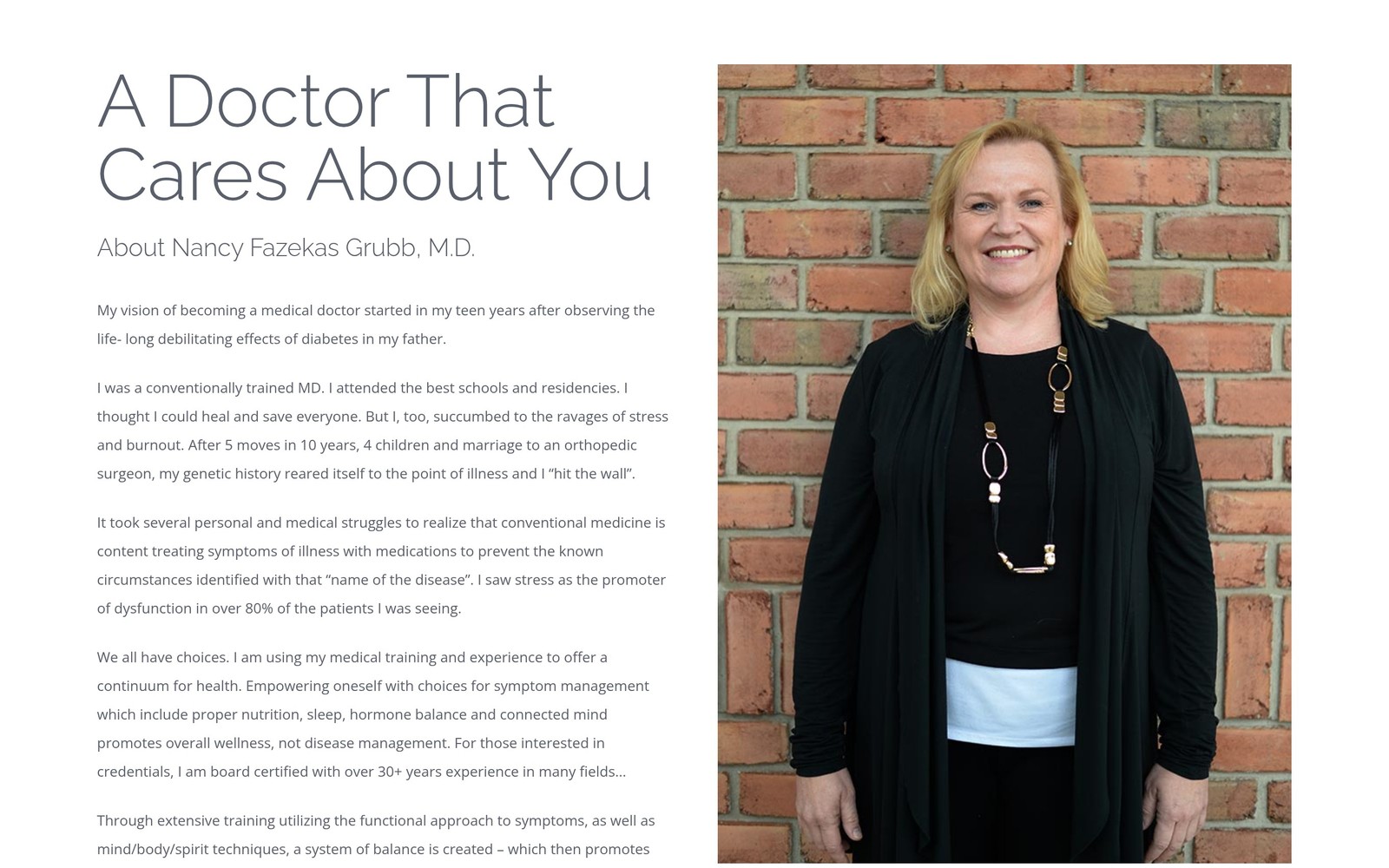
Optimal Health Institute of Ohio, Uniontown, Ohio
Dr. Nancy Fazekas Grubb’s practice sees patients from Akron, Canton, Cleveland and across the northeast of the state. She trained in conventional medicine, then chose a different path. She looks at how hormones, thyroid, energy, stress, diet and lifestyle affect each other, and treats the root cause, not just the symptoms. Her patients pay out of pocket, and most of them read before they book.
I have worked with the practice since its first year, 2014. I finished its first website, then built the site it still uses in 2016 and wrote most of the copy. I still host it, keep it up to date and make changes whenever her office asks.
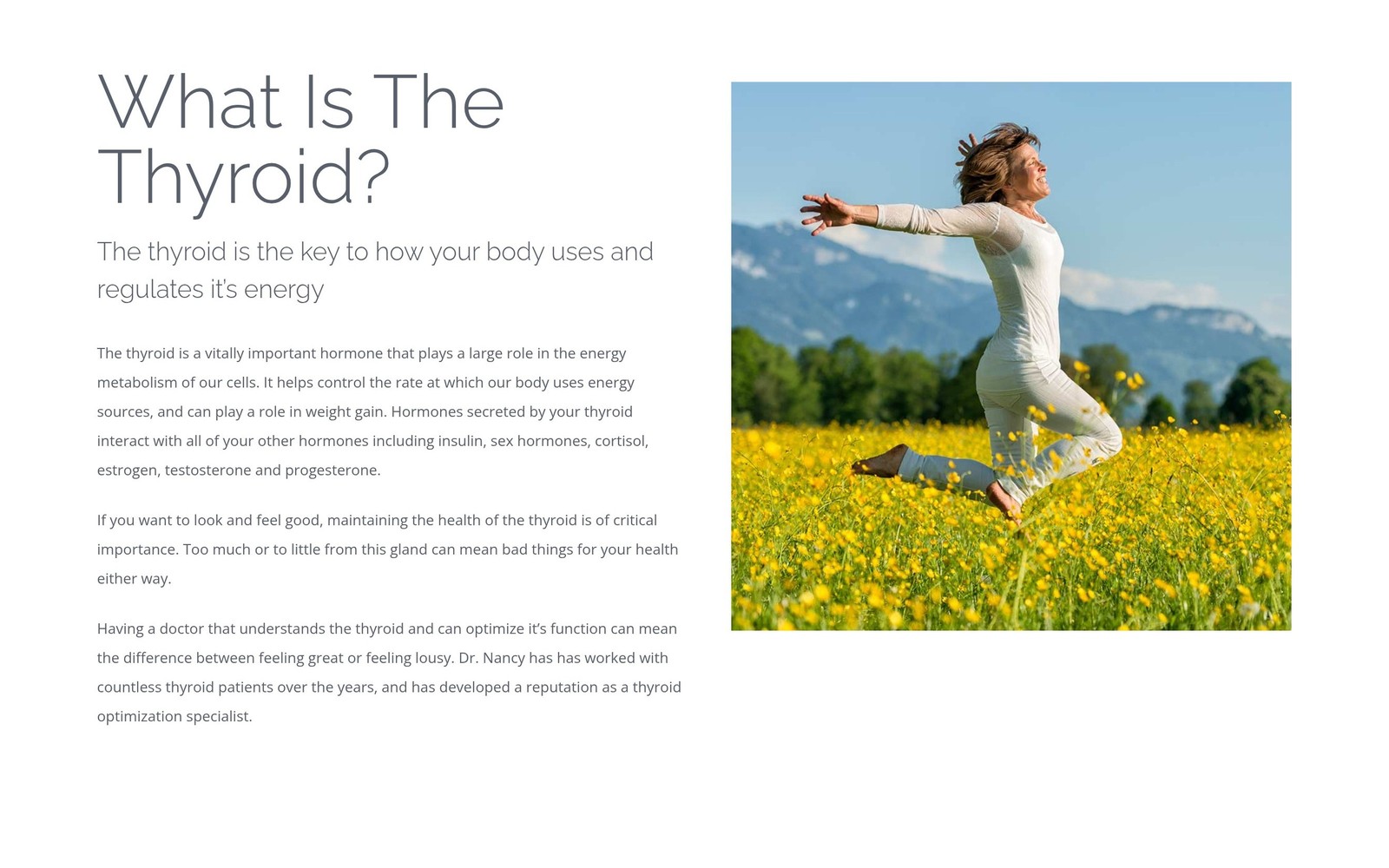
Still How Patients Find Her
Dr. Grubb says more than half of her new patient visits come from the web. The site shows up for more than 1,000 different Google searches, from her own name to functional medicine, hormone therapy and thyroid care across the region. It is on Google’s first page for about three times as many searches as in its first three full years, and it has needed very little since it was built.
“Josh Miller is a true talent with website development, design, and knowledge on maximizing SEO content. My new website design and content was delivered on schedule and with the latest style.
Over 50% of my new patient visits were referred from the web. I can not say that was the case with my previous website designed by a ‘plug and post’ company.
Josh was extremely considerate of my schedule. He quickly and efficiently implements any necessary changes. He has the capacity to listen and analyze my needs into the product desired. I appreciate his talent!”
Nancy Fazekas Grubb, MD · Optimal Health Institute of Ohio
A few common questions
What functional medicine practitioners ask before we start.
The questions I hear most from practitioners and practice managers. If yours isn’t here, ask it on the contact page.
What does a functional medicine website need to include?
A functional medicine website needs to give a patient enough to understand the practice’s philosophy and decide whether the approach is right for them before they ever reach out. That starts with a clear explanation of how the practice thinks about health, and a real answer to the question “what do you do differently, and why does it matter?” Functional medicine patients have usually been through the conventional system without answers. They need to see that this practice understands the problem they’ve been living with.
It also needs provider pages that show how the practitioners think about health, service and condition pages written in language a patient can follow, and a plain explanation of how the practice works, including the process, the cost and what to expect. Functional medicine patients read carefully, so the site should be organized to support that reading, with a clear way to book when they are ready.
Is Google Ads or SEO better for marketing a functional medicine practice?
Google and Meta restrict paid advertising for bioidentical hormones, many supplements, and treatments they classify as unproven. That means a significant portion of what functional medicine practices offer either can’t be advertised or can only be promoted in heavily limited ways. Paid ads aren’t a reliable way for these practices to find new patients.
SEO doesn’t have that limitation. Organic search gives you the space to explain your philosophy, describe your approach in detail, and answer the questions patients are asking before they ever consider booking. That’s exactly what functional medicine patients need from a website.
It also fits how these patients decide. They research over days or weeks before they commit, and a practice that keeps showing up while they read earns their trust. For most functional medicine practices, SEO is the main way to reach new patients.
How do I market my functional medicine practice?
Functional medicine marketing starts with search. Because paid advertising is heavily restricted for many of the treatments and approaches central to this specialty, digital marketing for functional medicine depends on search more than most. Search is the main way new patients find a practice, both in the regular Google results and in the Google map. That makes the website and its search presence the foundation of everything else.
The website needs to explain the practice’s philosophy clearly enough that the right patients recognize themselves in it. These patients judge the approach as much as the credentials and the location, so a site that explains how the practice thinks about health, what it treats and how it works does a great deal of the marketing.
Beyond the site, the Google Business Profile and reviews help the practice show up in the map when patients search for a functional medicine doctor or naturopathic clinic nearby. Structured data describes the practice’s services and approach to search engines and AI tools. And content built around the questions patients ask puts the practice in front of people who are looking for what it offers.
Word of mouth matters too, especially for cash-pay practices. Patients who had a very different experience are often glad to share it, and a strong website gives those referrals somewhere credible to land.
Does functional medicine SEO work differently than regular medical SEO?
Yes, mostly because of how patients search. Functional medicine patients often search with questions and symptoms before they have a diagnosis or know which specialty to look for: why am I always tired when my labs are normal? What could be causing my hormone imbalance? Is there a functional medicine approach to autoimmune problems? Those searches are longer and harder to predict than a typical healthcare search.
So the content has to match. SEO for functional medicine is built around the words patients use to describe what they are going through, as well as the clinical terms a practitioner would use. It needs depth, because patients doing serious research need enough to understand the practice’s approach and decide whether it fits.
The ad restrictions add another layer. Because organic search carries more weight, the SEO foundation matters more here than in most healthcare specialties. Done well, the practice’s website becomes part of how a patient works out what is going on and whether the approach makes sense for them.
How does AI search affect functional medicine practices?
Many patients now take health questions to AI tools, and functional medicine patients ask detailed ones: what could be causing my fatigue if my labs are normal? What is the difference between functional medicine and conventional care? What kind of practitioner should I see for hormone problems?
For general questions, like what causes fatigue, AI tools mostly quote the big health sites. A practice gets named when a patient asks for a practitioner nearby, and then the AI tools lean on what the practice has written about its approach, and on profiles and listings that agree. How I work on it starts with an AI Visibility Audit.
Do you work with naturopathic practices?
Yes. Naturopathic doctors and functional medicine practitioners are distinct professions, but their marketing needs are nearly identical. Both serve patients who are looking for a different approach to their health, both operate largely outside of insurance, and both face the same paid advertising restrictions that make SEO the primary acquisition channel.
Website design for naturopathic doctors requires the same philosophy-forward approach as functional medicine. Patients judge the practitioner’s thinking as much as the credentials and the location. SEO for naturopathic clinics follows the same logic. Build content around the questions patients are actually asking, in the language they use, structured so the right patients find the practice during their research.
If you run a naturopathic practice and are looking for someone who understands how your patients find you and what they need to see when they do, this is the same work.
What's the difference between SEO and local SEO for a functional medicine practice?
Local SEO is one part of SEO. SEO covers everything that helps your practice show up in search, and local SEO is the part that deals with nearby searches and the Google map.
For a functional medicine practice, much of the work happens in the rest of SEO. Patients usually read about what they are going through long before they look for a practitioner, and pages that answer their questions well bring in patients from across a whole region.
Local SEO matters most for the patients close by. It decides whether your practice appears in the map when someone searches “functional medicine doctor near me.” It adds a few things of its own: your Google Business Profile, your reviews, and how consistently your details appear across the web.
It is all one job, done on the same website. Google checks your Business Profile against your website, and the pages that answer patients’ questions also help you show up nearby. I handle both together.
How can I get my functional medicine practice to show up in Google's local map results?
Showing up in Google’s local map results starts with a complete and accurate Google Business Profile. Your practice name, address, phone number, hours, and services need to be correct and consistent with what’s on your website. Google cross-references your listing against your site, and inconsistencies between the two are one of the most common reasons practices don’t appear in the map.
The category you select in your Google Business Profile matters too. Choosing the right primary category, whether that’s functional medicine, naturopathic, or integrative medicine, tells Google what kind of practice you are and which searches to connect you to. Reviews also play a significant role. Functional medicine patients read them carefully, and a profile with detailed, relevant reviews signals to both Google and prospective patients that the practice is active and credible.
The website needs to back up your contact details. It needs to clearly describe what the practice does, who it serves, and where it’s located, using the same language and information as your Google Business Profile. When the website and the listing are built to reinforce each other, Google has a consistent, clear picture of your practice, and that’s what earns map visibility.
Do you work with functional medicine practices outside of Colorado?
Yes. Most of my work is with practices outside of Colorado. I’m based in Denver, and functional medicine website design, SEO, local search and ongoing optimization are all handled remotely. Optimal Health Institute of Ohio has worked with me since 2014.
What matters is understanding how the practice operates, who its patients are, and what the website needs to do. Once that’s clear, the work is the same wherever the practice is.
Do you work with cash-pay and out-of-network practices?
Yes. Optimal Health Institute of Ohio is a cash-pay practice. Patients who pay out of pocket decide for themselves, and they read carefully first, so the website has to explain the approach, the process and the cost clearly enough that they can decide before they call.
Will you write the content, or do we have to?
I’ll write it. I can write every page from scratch, but I’d rather start from how you explain your approach, because that approach is why patients come to you. You don’t have to write the pages. A few notes, a bulleted list or a book you trust is enough, and I turn it into the pages. Before I wrote most of the copy for Optimal Health Institute of Ohio, I read a book Dr. Grubb gave me on bioidentical hormones and functional medicine, so I could explain her work accurately to her patients. Finding the practice’s voice is part of the design process. I find the voice the practice already speaks in, or develop one with you, so the website sounds like the practice patients meet in person. You review every page before it goes live, and you can be as involved as you want to be.
Can you work with the website we already have?
Yes. Optimal Health Institute of Ohio’s first website went live before it was finished. I finished it and kept it running, and then we built the site the practice still uses. Sometimes the right answer is to improve what is there, and sometimes it is a redesign. I’ll tell you which.
What happens if you're unavailable?
I travel with my laptop, so if something urgent comes up, I can handle it from wherever I am. Your website runs on managed hosting with daily backups and a support team available around the clock, so the technical safety net doesn’t rest on one person. You own your domain, your website and your logins, and if you ever needed someone else to step in, I’d give you everything they need. I typically respond to requests quickly, and some of my clients have been with me for more than ten years. At an agency, the person who knows your practice can leave. With me, it’s always the same person.
Do you work with my competitors?
No. I won’t work with a practice that competes with one of my clients for the same patients in the same area. If you’re my client, I’m on your side, and I want you to win. I do work with functional medicine practices in other areas, but never two competing in the same market.
Next specialty
Dermatology
More specialties

Get in touch
If your functional medicine practice is better than its website shows, I can help.
Tell me what your practice does best and who you want to reach, and we’ll both get a sense of whether we’re the right match.