


Industries · Healthcare · Med Spa
Med Spa SEO and Website Design
I design websites and handle SEO and local search for med spas and aesthetic clinics. Each site is built to bring in new clients, and I keep it growing after launch.

How clients choose
Med spa clients choose a practice by what they can see.
Med spa clients have no referral and no insurance network steering them to one practice. They scroll Instagram, read reviews, look at results and visit a few websites before they speak to anyone. By the time they reach yours, they have usually compared you with two or three others.
Most clients can’t judge an injector’s skill directly. So they judge what they can see: the photos, the results, the reviews, and how carefully the website is put together. They are deciding whether to trust the practice with their face and body.
That makes the website part of how clients judge your work, before they ever walk through the door.

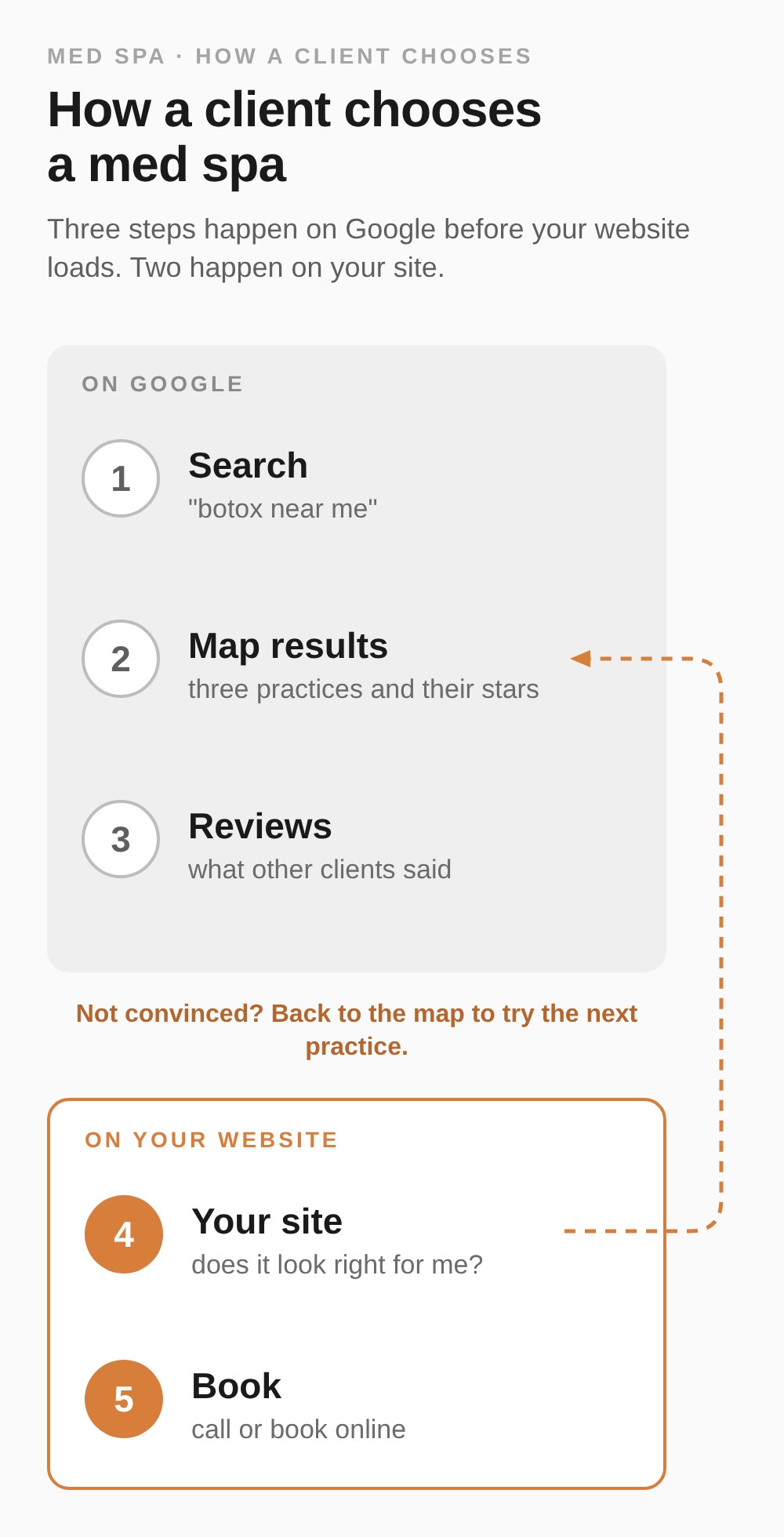
This is why I work on a practice’s Google listing and its reviews along with the website.
Who this is for
Aesthetic clinic, cosmetic treatment center, or med spa: the clients are the same, and so is the work.
Med Spas
Clients search for a treatment, compare a few practices and book the one that looks right. The treatment pages and the photography do most of that work.
Aesthetic Clinics
Some practices prefer “aesthetic clinic” for a more medical feel. The site is built around how the practice wants to come across and the clients it wants.
Cosmetic Treatment Centers
Injectables, lasers, skin treatments and body contouring each get a page of their own, written for clients who are still comparing options.
What a med spa needs to get right online.
- 01
A website that looks as good as the work your team does.
- 02
A page for each treatment clients search for by name.
- 03
A strong place on the Google map, where clients choose.
Med Spa Website Design and Client Trust
Med spa clients judge the practice by how its website looks. They are choosing someone to trust with their appearance. A site that looks dated or rushed raises doubts about the practice before a client reads a word. The design should reflect the practice. The look, the photography and the words should give clients an accurate sense of it before they walk in, including what it values.
A professional website also sets a medical practice apart. Some places in this market offer injections with little training or medical oversight. A practice with a high standard of care should look like one, and the website is often where clients see and feel it first.
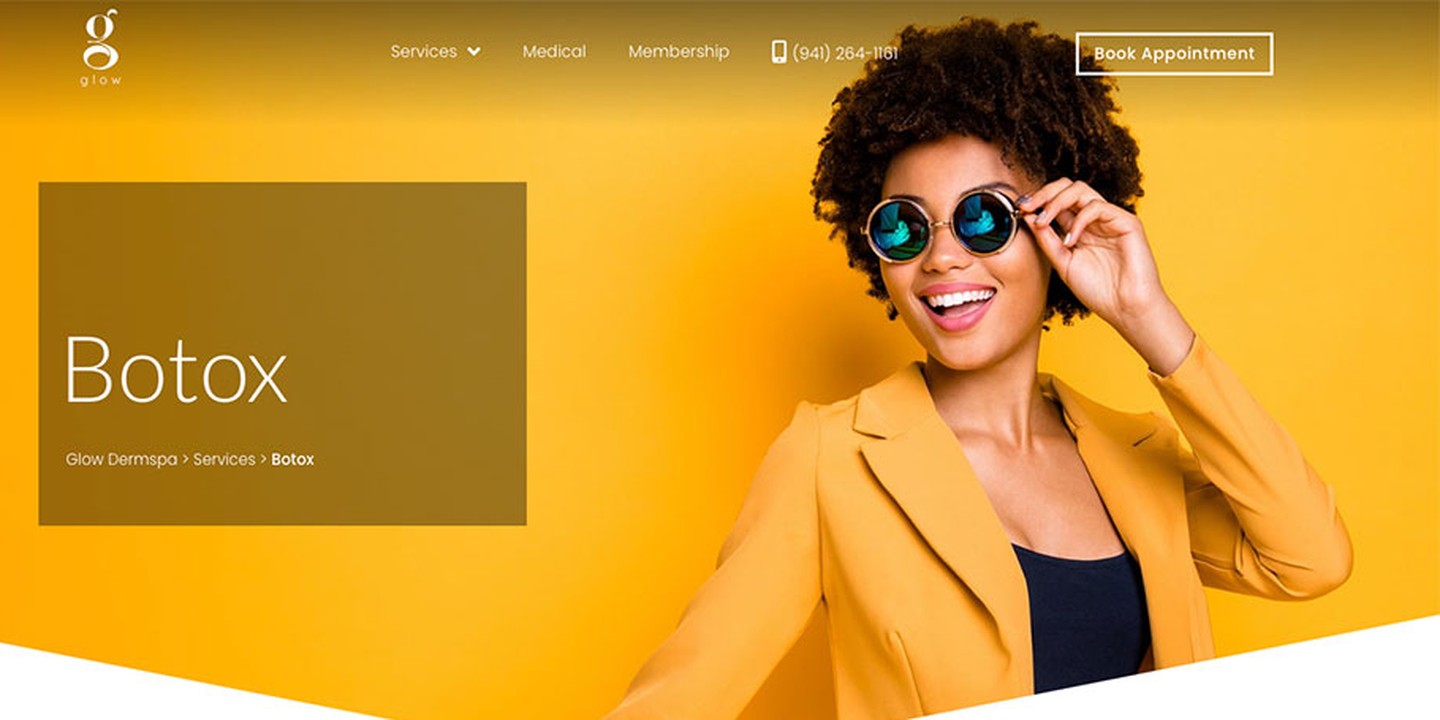
The photography sets the tone. Stock models can still create a great feeling, but only when they are chosen with great care. Picking the images and curating them so they work together takes an artistic eye. So many med spa websites use the same stock photos, and it makes them look generic. When Glow Dermspa relaunched in 2022, I moved the site to the practice’s own providers and rooms, with models chosen to look like the people who actually come in. The site looked like the place you would walk into. The practice is now Arsenault Aesthetics, led by Melissa Beachy, PA-C, one of Allergan’s national trainers.

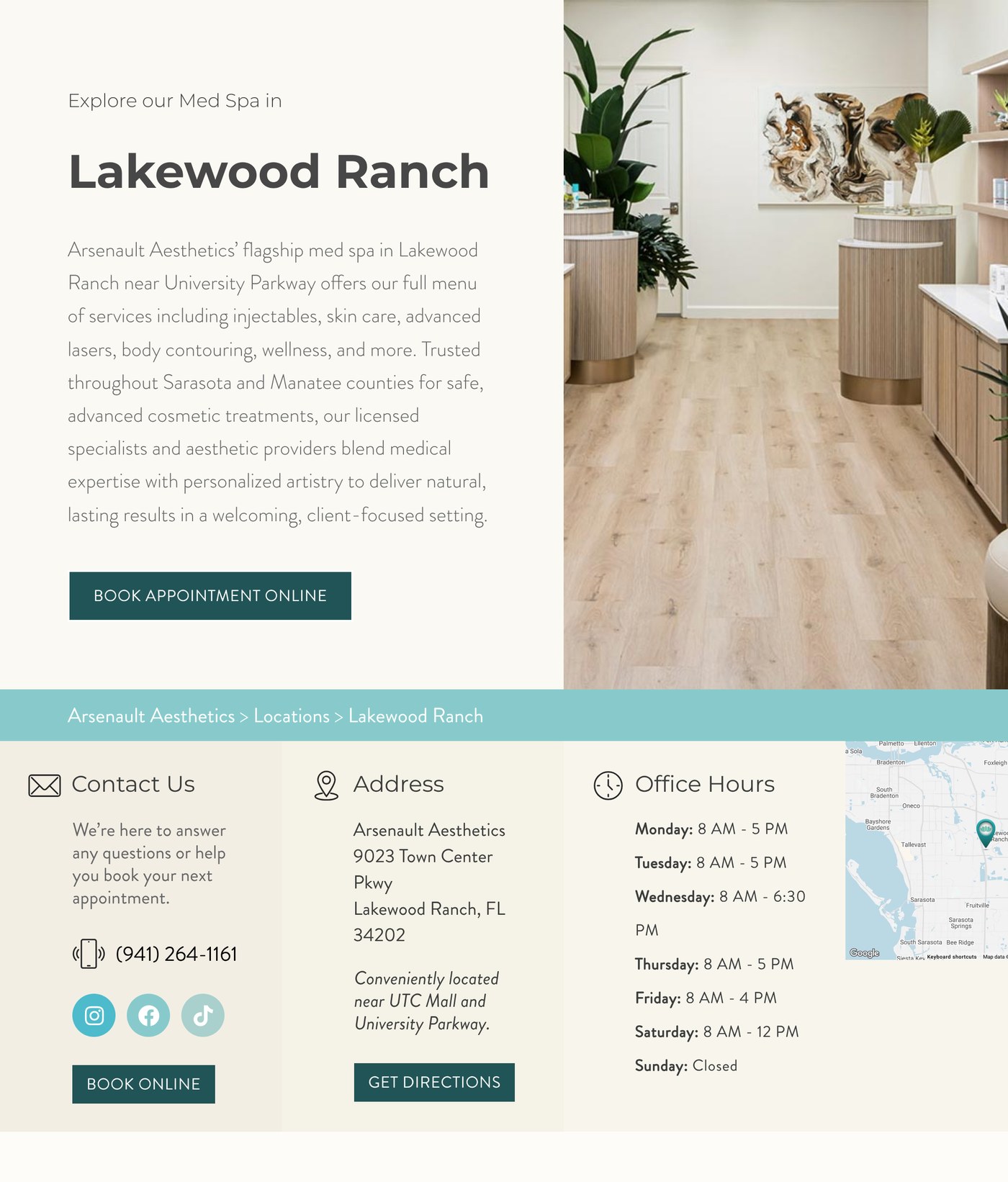
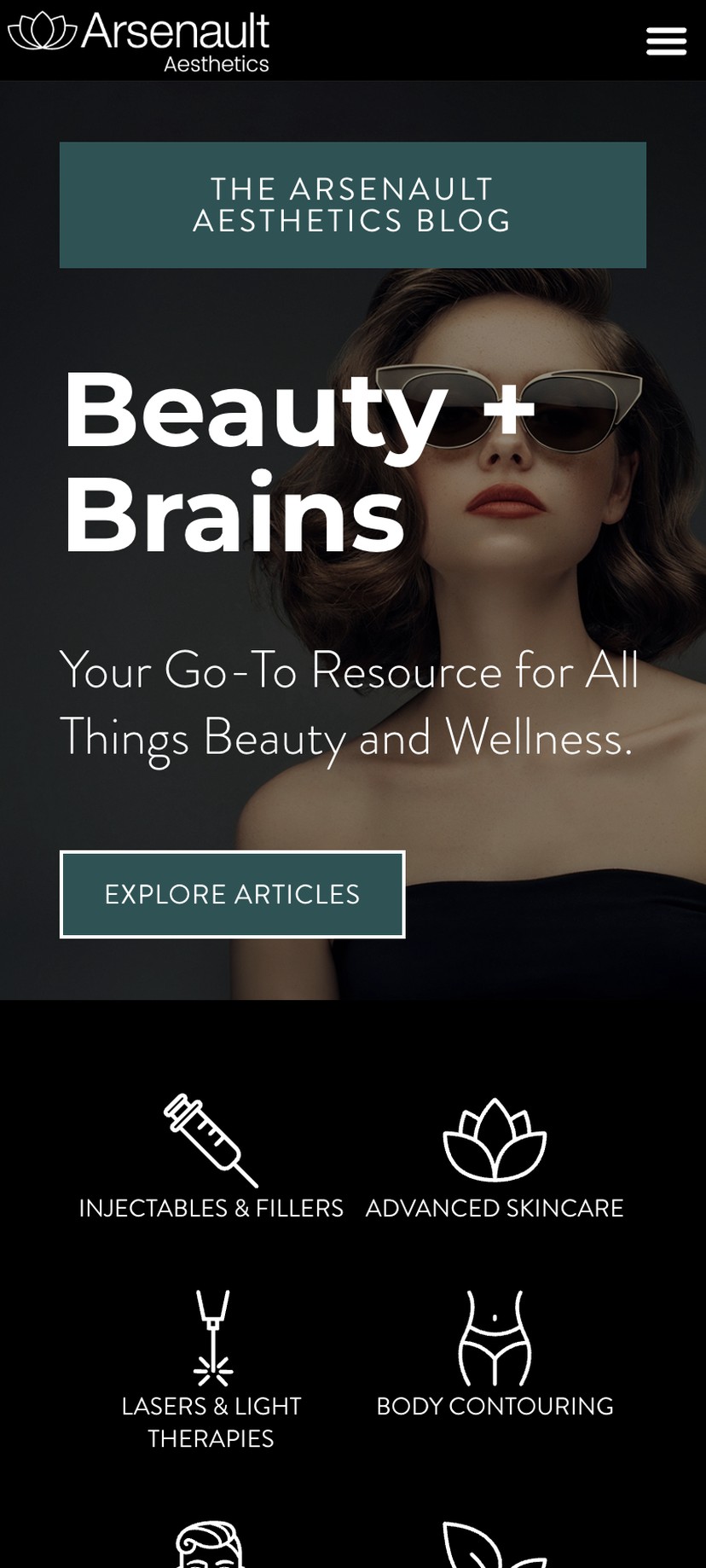
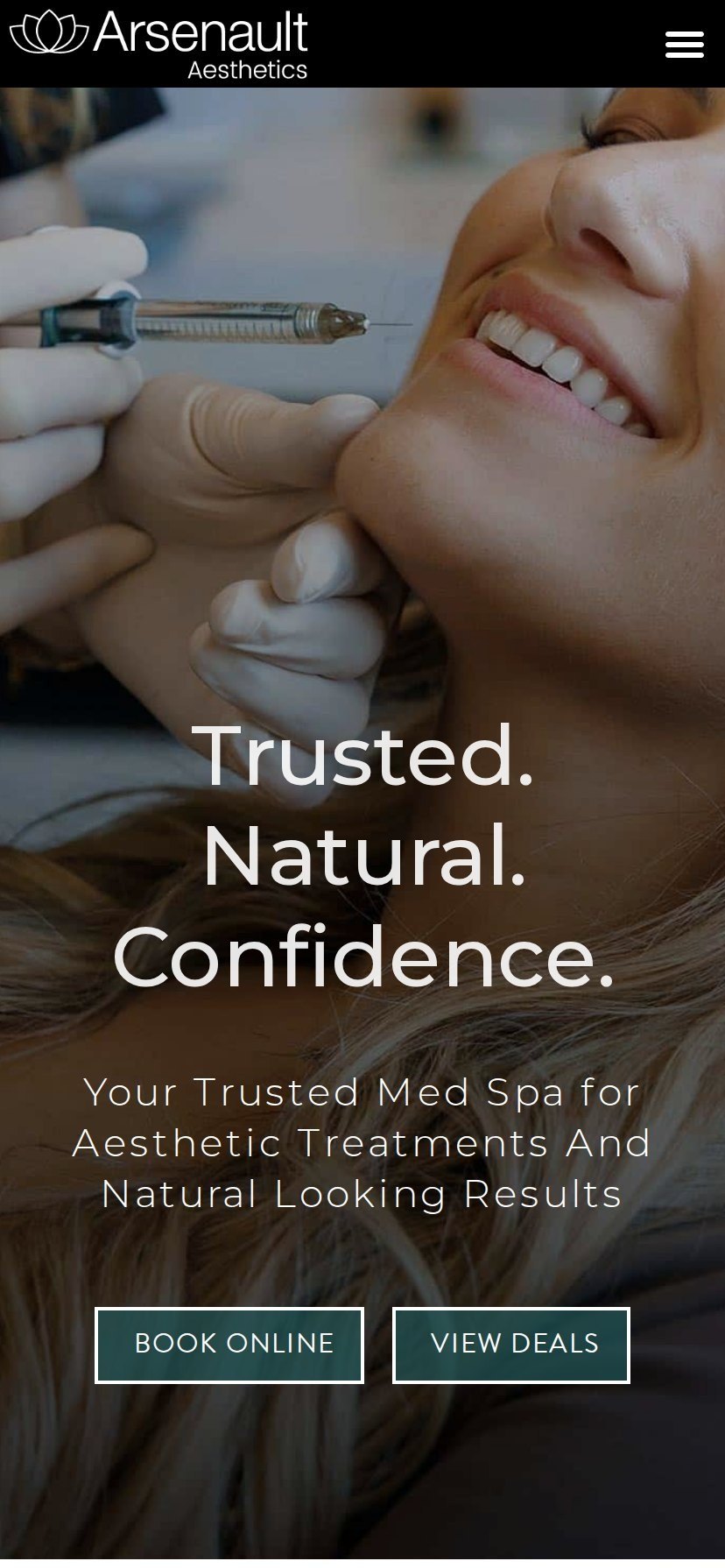
Arsenault Aesthetics, with the practice’s own team and its Lakewood Ranch office on its pages. See the case study →
A good med spa website meets clients where they are. Many arrive with a goal in mind more than a treatment, like looking less tired or getting ready for a wedding. Others already know they want Botox or a HydraFacial and are choosing where to get it. The site has to work for both kinds of client.
The words matter as much as the layout. The pages should describe results the way clients think about them, like softer lines or brighter skin, and then explain the treatments that get there. Good medical spa website design (or medspa website design, however the practice spells it) is built for browsing: a clear menu of treatments, a page for each one, and a way to book from any of them.
Not every page is there to bring in new clients. Many support the clients a practice already has and the way it runs day to day. Monthly specials give regular clients a reason to come back, so they need a place on the site that is easy to change each month. Consent forms, aftercare instructions and pages a provider sends a client by link save the front desk time and help clients feel looked after between visits. Some of these pages never show up in Google, and they are some of the most useful pages I build.
If the site you have no longer matches the practice, a redesign closes that gap, and a careful one keeps the Google rankings the old site earned.
I can build this for your med spa. I plan the site, write the words and design every page myself, so it looks and feels like the practice your clients walk into.
“What immediately stood out to us was the use of vibrant colors and the consistency of our branding throughout the site. More importantly, he did an excellent job capturing the vision of who we are, what we do, and what we specialize in at Skin Health Forever. The site clearly communicates our services and makes it easy for patients to understand who we are and how we can help them.”
Denise Didley · Skin Health Forever
Med Spa SEO
Med spa clients search in two ways. Some search for a treatment by name: “Botox near me,” “lip filler,” “laser hair removal.” Others search for what they want to change, often as a question: “How can I tighten my skin?” or “What gets rid of wrinkles?” They don’t know yet which treatment they need, and many now ask those questions in ChatGPT as well as Google.
Med spa SEO helps clients find your practice in both kinds of search. A thorough page for each treatment answers the first kind. Articles that answer the second kind explain the options and link to the right treatment page, so a client who starts with a question ends up somewhere they can book. The same work is medical spa SEO or aesthetic clinic SEO, whatever the practice calls itself.
It is the same healthcare SEO method I use for every specialty.
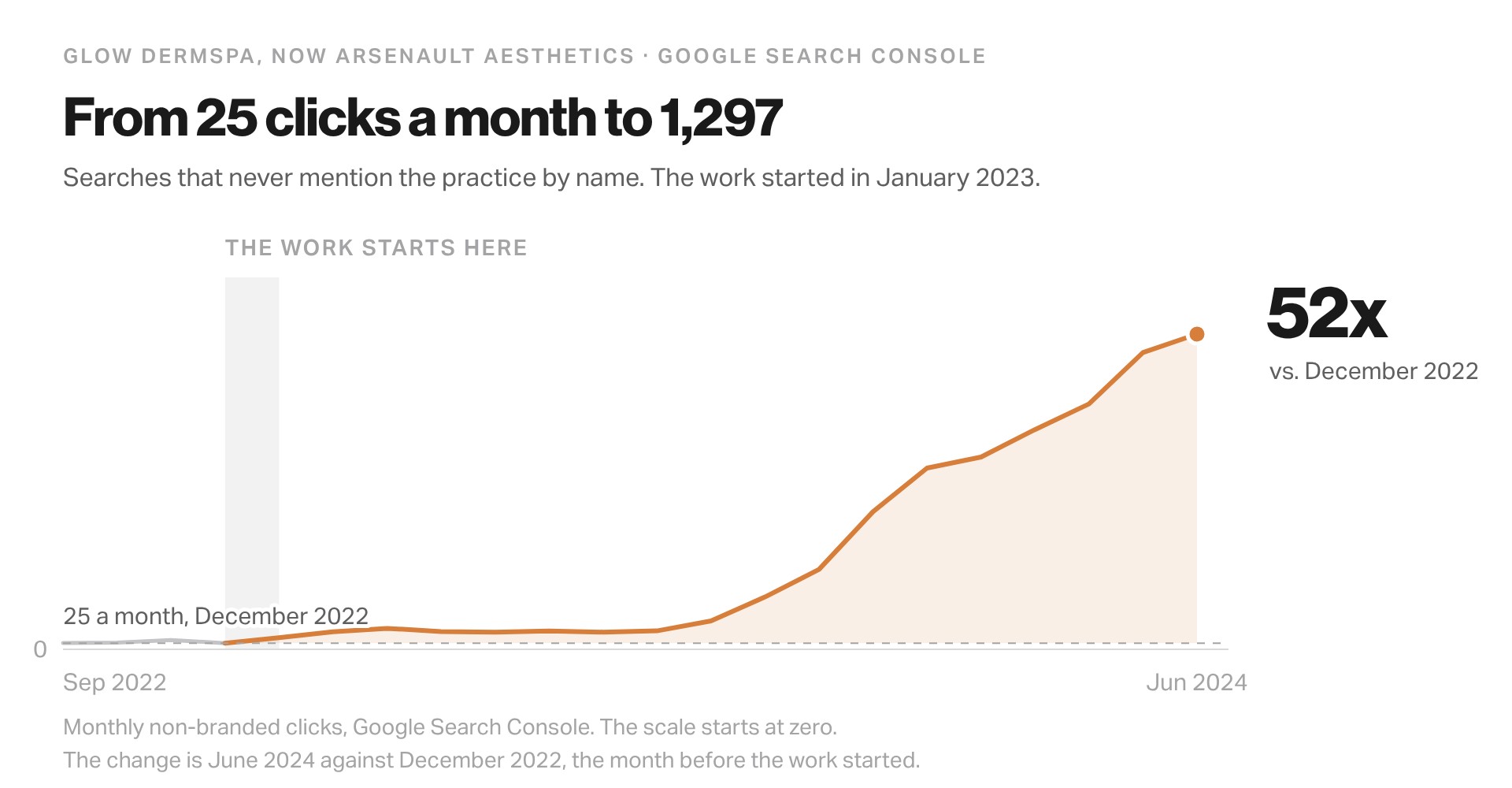
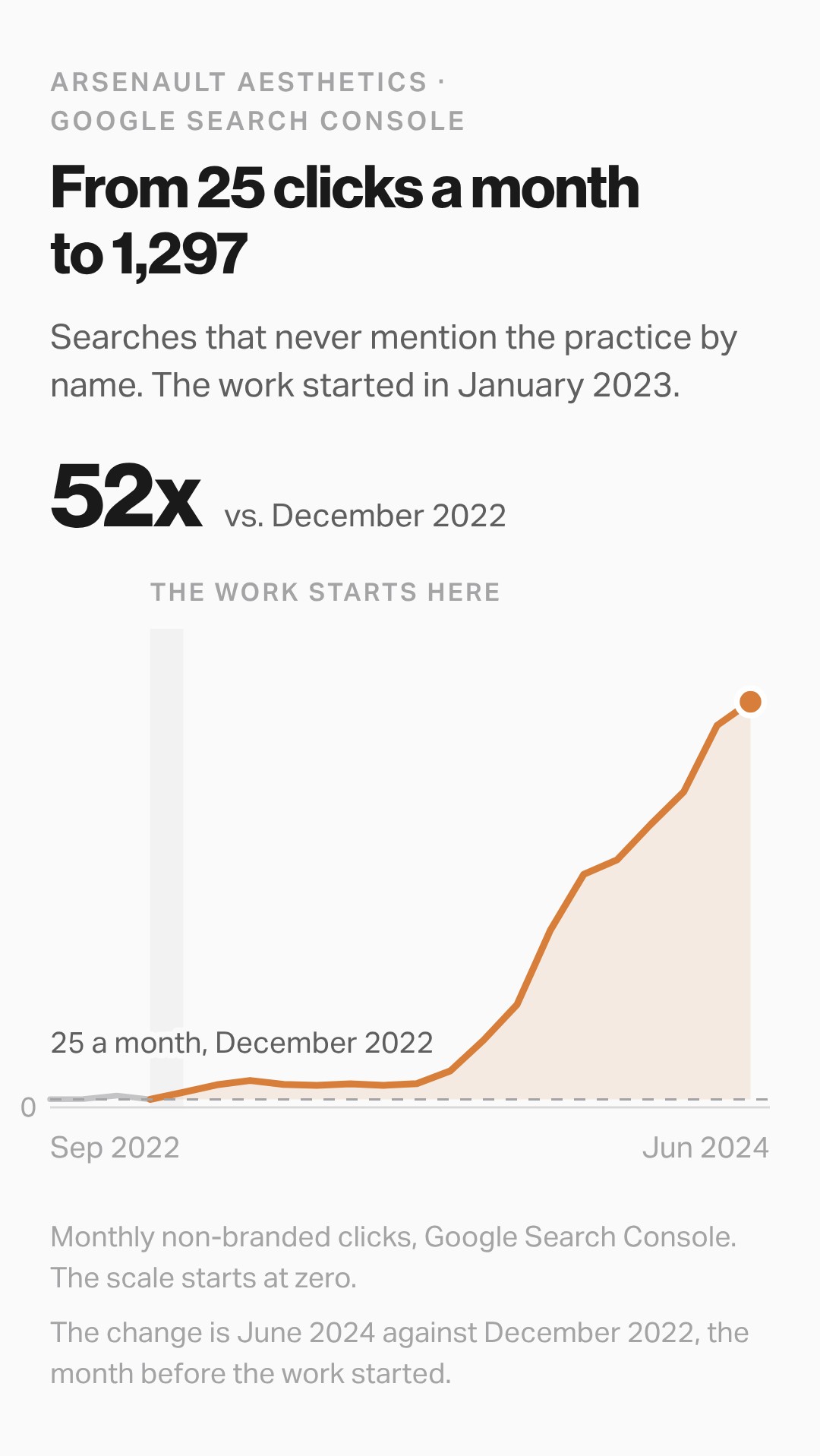
Arsenault Aesthetics started from zero, without “med spa” in its name. Nearly every competitor in its market has those words in its business name, which helps them in local search, so the practice had to be found through what was on its website. A page for every treatment took it from 25 non-branded clicks a month to 1,297, and online bookings rose 43 percent.
I can do the same for your med spa. I find what clients in your area search for, then write the treatment pages and articles that answer them, adding new ones as your menu grows.
Local SEO for Med Spas
For most med spas, the Google map is the most important search result. When someone searches “med spa near me” or “Botox near me,” Google shows a map and a few practices, and many people choose from those few. Local SEO for medical spas gets your practice into that group and keeps it there.
It starts with your Google Business Profile: whether it’s complete, accurate, and set up correctly for the treatments you offer. It extends to how your practice appears across the web, how your reviews read to someone seeing them for the first time, and how your website backs up everything Google sees about your practice. When all of it agrees, Google can trust what it sees about your practice.
A business name can work against you. Google gives weight to names that match the search, and most med spas have “med spa” in theirs. Adding it to your listing breaks Google’s rules. The fix is everything else on the profile: every treatment listed and described, real photos, regular posts and events, and listings that match everywhere you appear.
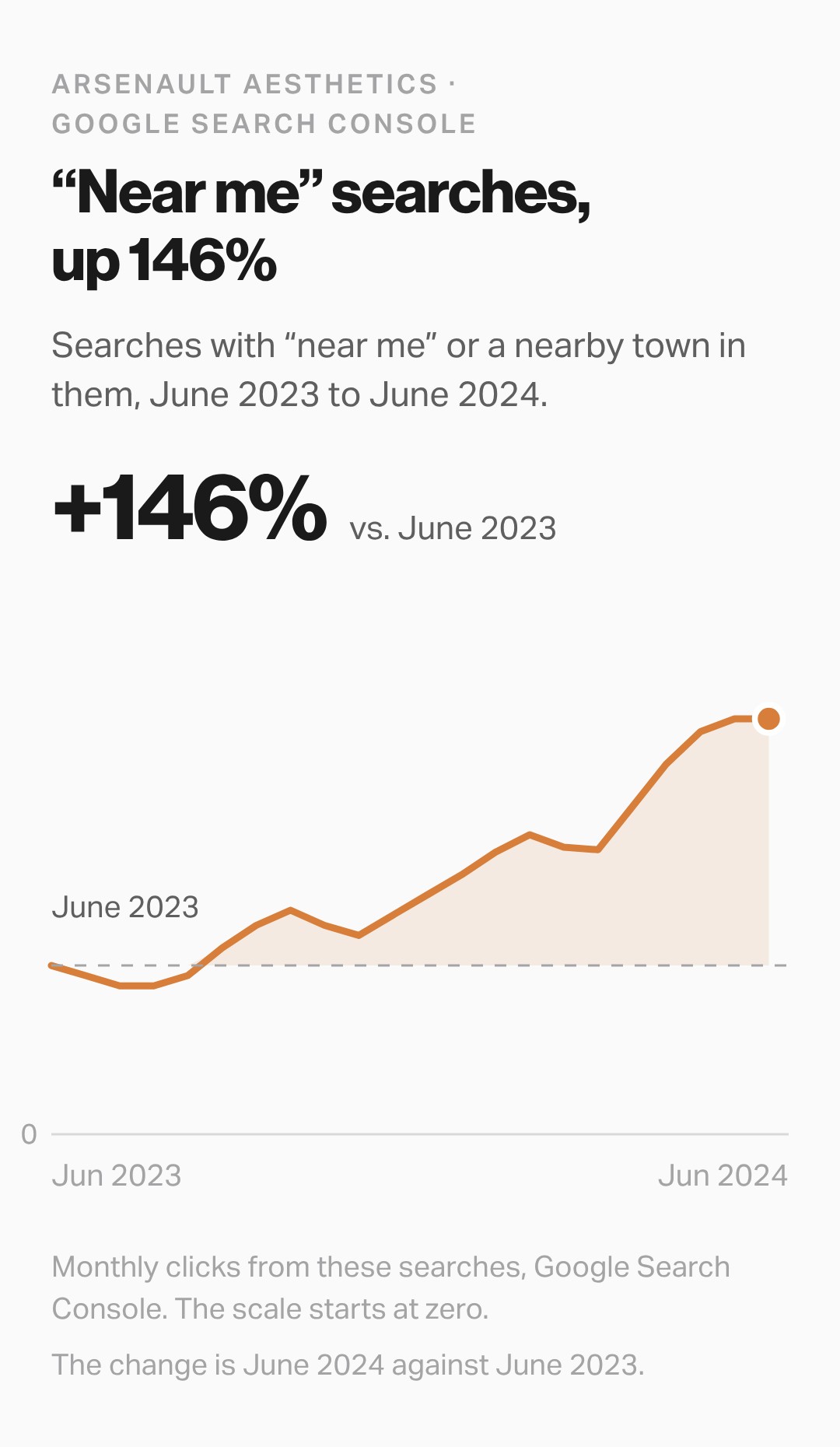
That is how I ran the local campaign for Arsenault Aesthetics. Searches with “near me” or a nearby town in them come from the clients closest to booking, and they rose 146 percent in a year.

I set up and run all of this for you, from your Google Business Profile and listings to a steady stream of new reviews, and I keep it current as your treatments and providers change.
Profiles, listings, and reviews are covered in more depth on the local SEO page, including what is different about local search for medical practices.
Structured Data for Med Spas
Structured data is code that states the key facts on your website in a way that’s made for search engines and AI tools to understand. It spells out which treatments you offer, who performs them and where, so they get those facts right. It is written in a shared language called Schema.org, which Google and Microsoft both read, and AI tools can read too.
For a med spa, structured data adds up to a map of the whole practice. The map connects each treatment to what it is for, the providers who perform it, and the locations and specials where it is offered. People understand a map by looking at it. Search engines and AI tools read this one in code, and it is called a knowledge graph. It gives them a full and clear picture of your med spa.


Most med spas have only basic structured data, usually little more than the business name, address and hours, or none at all, and that is the opportunity.
As AI systems get more capable, they will rely more and more on the code behind a website. Every website I build comes with a full knowledge graph, and I keep it current as your treatments and providers change. If you already have a website, I have options for adding one.
The schema and knowledge graphs page shows what the code looks like, with a section on how it is built for a medical practice.
AI Visibility for Med Spas
More clients now ask AI tools like ChatGPT, Claude and Perplexity where to go. “What’s the best treatment for fine lines?” “Where should I go for Botox near me?” The tools answer with a few names, and clients often choose from that short list.
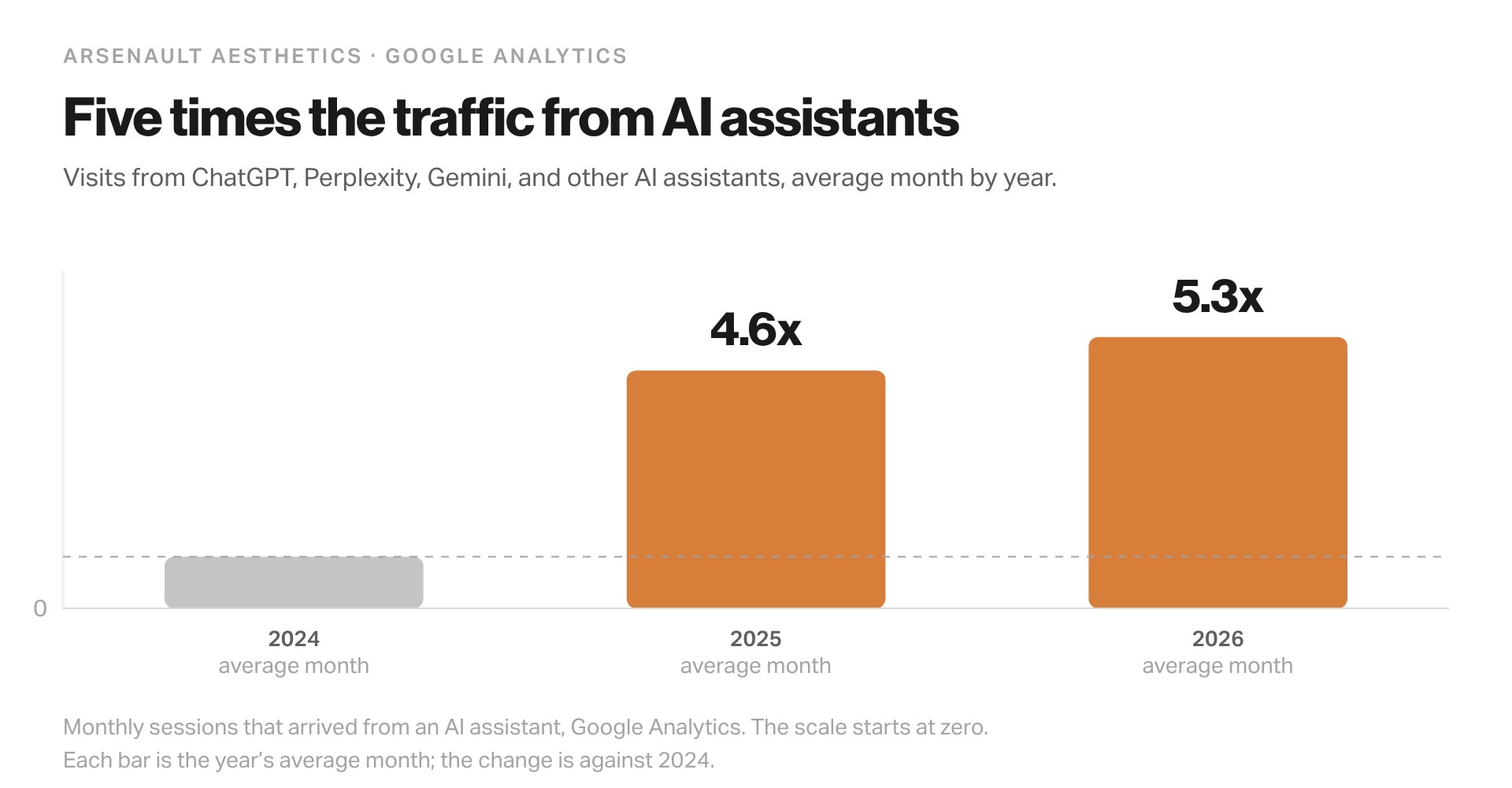
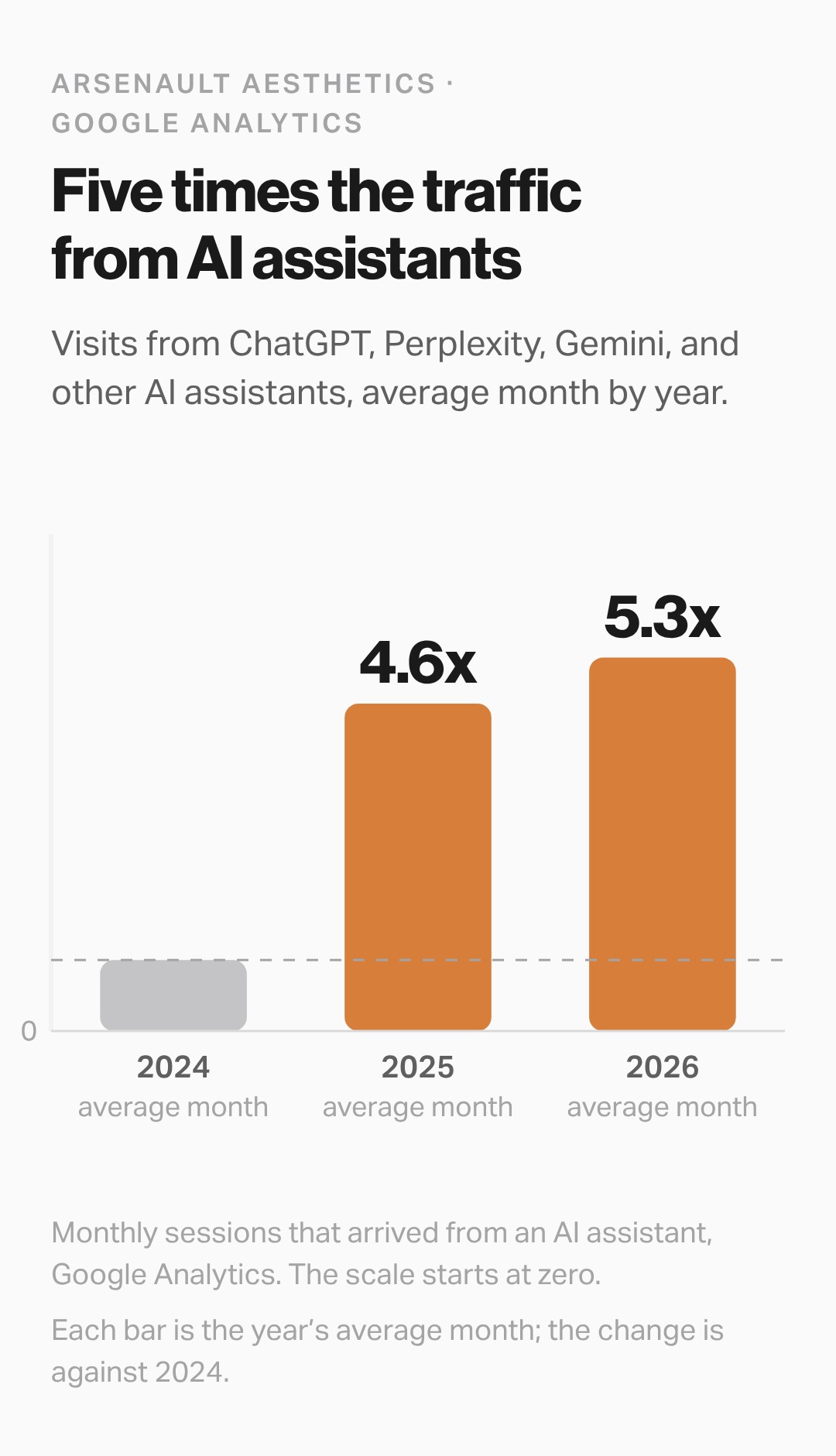
My med spa client already shows up in AI answers. Ask ChatGPT for the best med spa in Lakewood Ranch, and it names Arsenault Aesthetics, usually among the first three. AI assistants have also sent the practice nearly nine hundred visits, from a handful a month in 2024 to dozens a month in 2026.
Starting early on AI search optimization is an advantage. AI search optimization means working on what these tools draw on: the practice’s pages, reviews, listings and knowledge graph. These tools favor practices that are well established online, and that takes more than the right pages. It takes time for reviews to add up, for other sites to mention the practice, and for search engines and AI tools to come to trust it. A practice that waits can build the same pages later, but it can’t make up that time. A practice that starts now will also be in a much better position as more clients move from Google to AI.
Searches with a town or “near me” in them still mostly show the map, so the map is still where most clients choose a med spa. I take care of both for you as part of your SEO, and I check regularly what ChatGPT, Google’s AI and other tools say when someone asks for a med spa nearby. The AI search optimization page covers how, starting with an AI Visibility Audit.
One Person, Everything Connected
Med spa marketing usually gets split among several vendors. One firm builds the website, another does the SEO, and someone else looks after your Google Business Profile. You end up explaining your practice to each of them separately. Because no one sees the whole picture, the details stop matching. A new treatment shows up on the website but not on the Google listing, or a provider who has left is still listed on one of them. Having one person handle all of it is a big advantage, because everything stays consistent. When you add a treatment or a provider joins, the website and the Google listing change together.
For medical spa marketing, that one person is me. I design the site, write the pages, do the SEO and look after the Google Business Profile, so every decision is made with the rest in mind.
It also gets better over time. I come to know your practice, your treatments and how you like things done. You don’t have to explain the background again each time, because I already know it. A short note is enough, and the work gets done.
That is how I work with Arsenault Aesthetics. Melissa Beachy brings the clinical expertise and the ideas, the practice’s designer makes the monthly specials, and I build it all into the site.
Independent med spas have a story to tell, and it’s a strength. Many med spa websites look alike, because they are built from the same templates, and you may be competing with national chains that have big advertising budgets. But you have your own advantage: your standard of care and the way your clients feel about it. Clients want a provider they trust with their face. Nobody wants to feel like just another appointment. I help show clients who you really are.
Related
Web design and development
How a site gets structured before it gets designed.
Healthcare SEO
How patients search for care, and the work that answers it.
Local SEO
Getting on the Google map, and staying there.
Arsenault Aesthetics
From 25 non-branded clicks a month to 1,297.
See my work
Every case study, with the evidence.
“Now I feel so proud and confident every time I share our website! The entire website feels elevated, professional, and inviting, but still captures our relaxed aloha vibe. Josh really understood how to blend luxury with our down-to-earth personality. The beautiful fonts, layout, and imagery make you want to keep scrolling. It finally looks and feels like the established, high-end bridal beauty company we’ve worked so hard to become.”
Nikki Quinn · Lead Stylist and Owner, Love and Beauty Maui
Med spa experience
I’ve worked with med spas and aesthetic practices since 2021, from a brand-new launch to the cosmetic side of established dermatology practices.
Arsenault Aesthetics
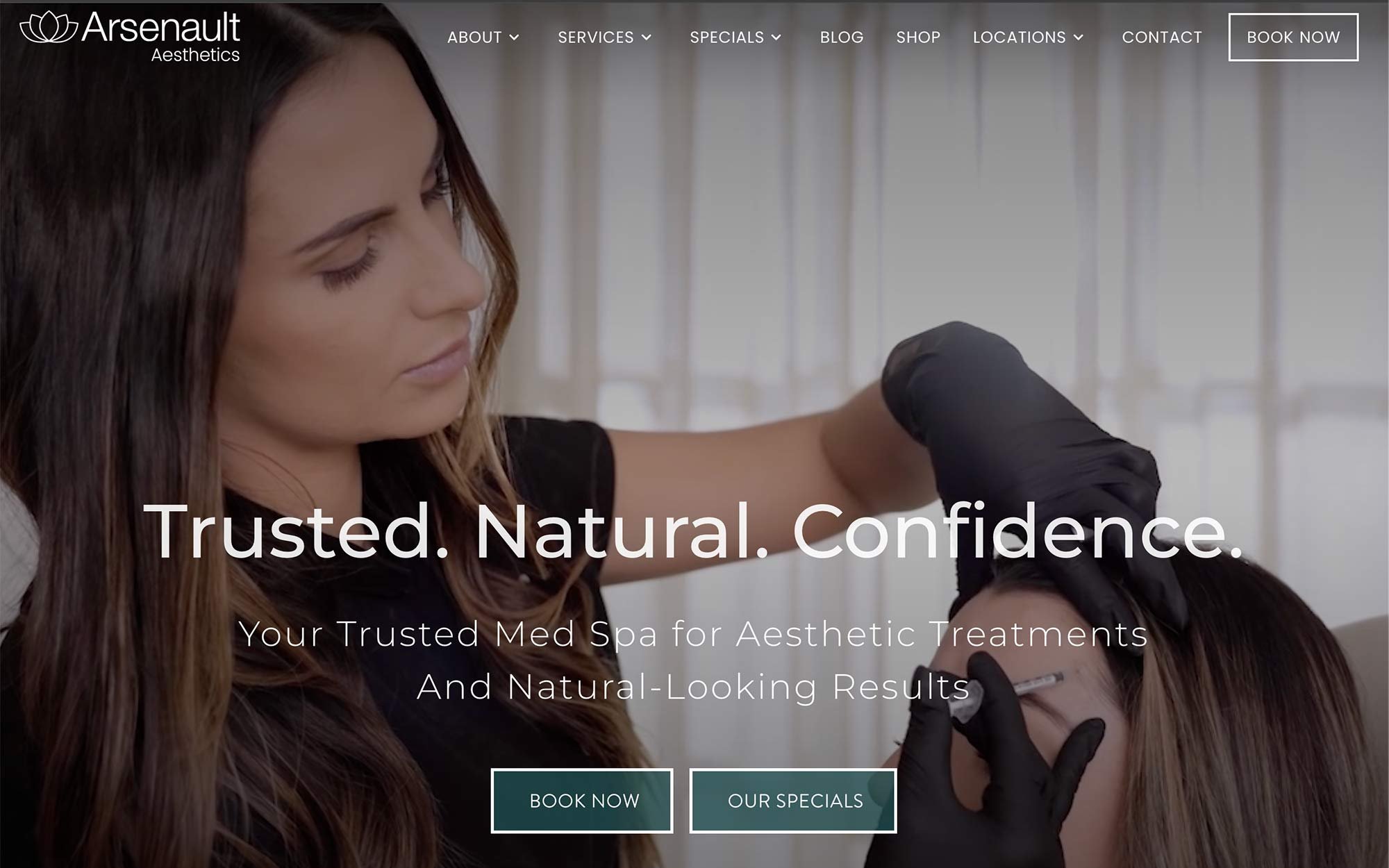
A new med spa led by Melissa Beachy, PA-C, with its website and search presence built from zero and carried through a rename.
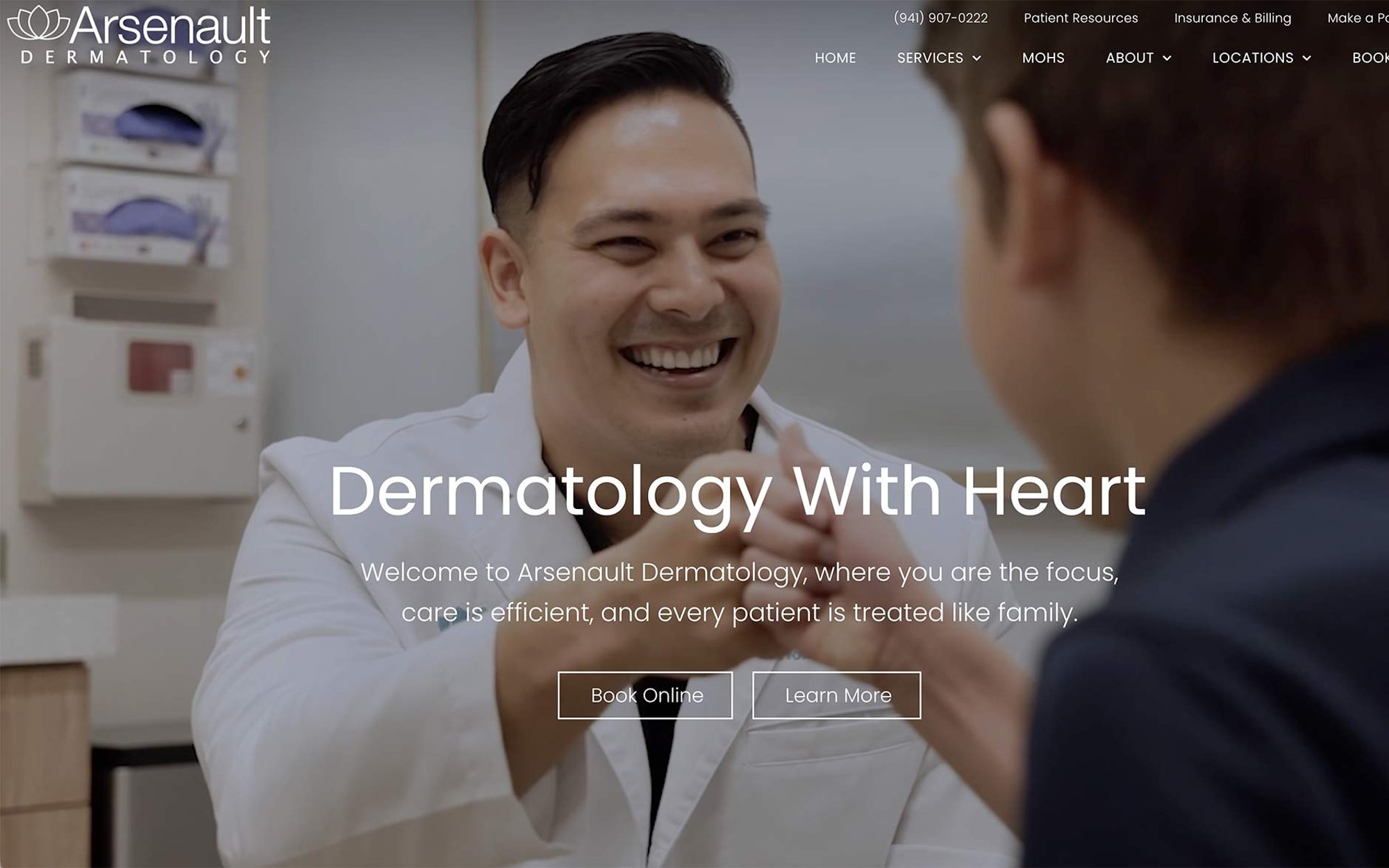
Arsenault Dermatology
Web, SEO, local search, and print for one of the Gulf Coast’s best-regarded dermatology groups, built one piece at a time since 2020.
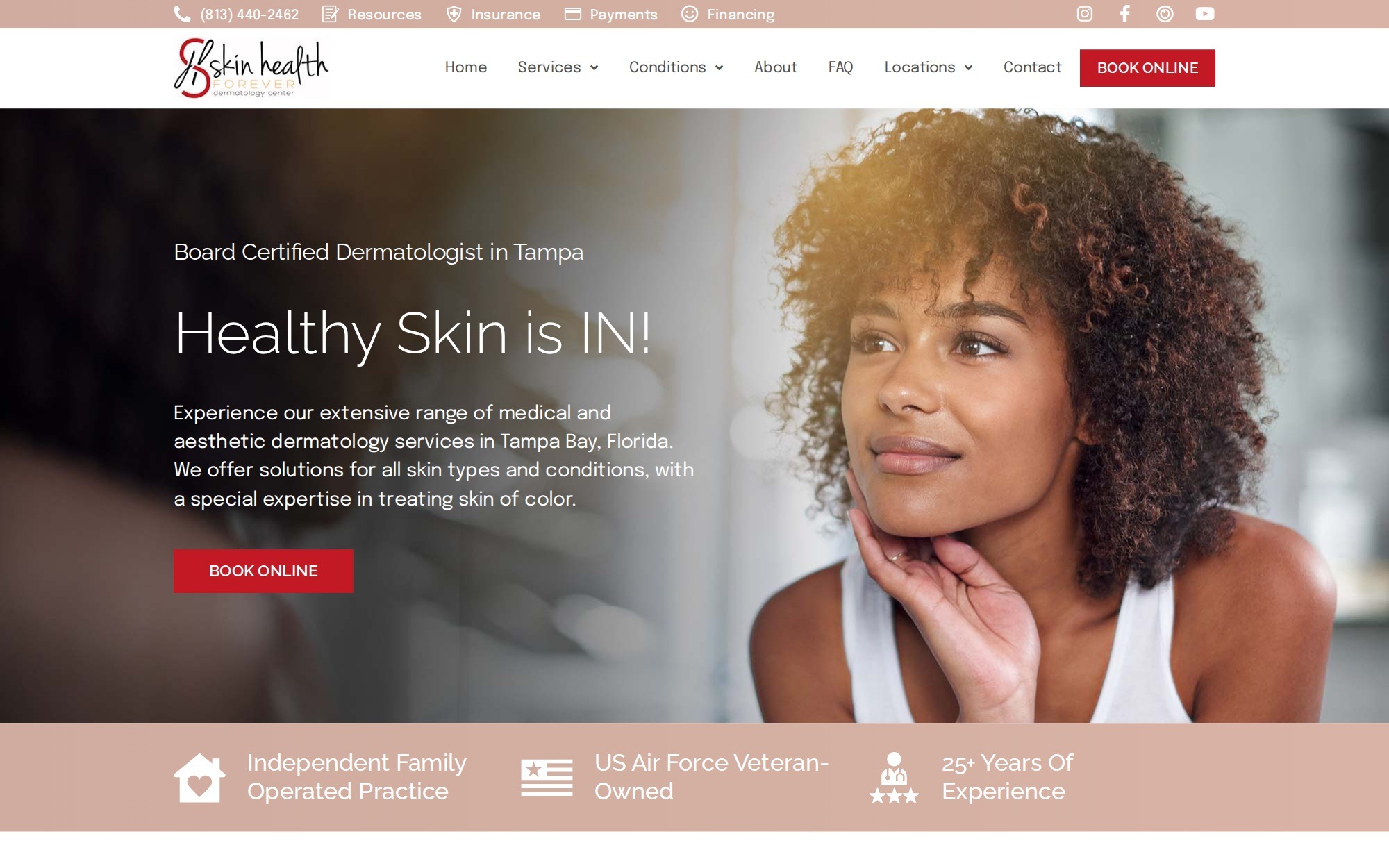
Skin Health Forever
A Tampa dermatology practice whose specialty in skin of color is something you see before you read a word.

Love and Beauty Maui
A Maui wedding hair and makeup studio, with a new website built around real photographs of its brides.
A few common questions
What med spa owners ask before we start.
The questions I hear most from owners and practice managers. If yours isn’t here, ask it on the contact page.
What makes a good med spa website?
A good med spa website earns trust at a glance and makes it easy to find the right treatment. That means photography chosen with care and a look that matches the quality of the practice, a clear page for each treatment, reviews and credentials that are easy to find, and a way to book from every page. Clients often arrive unsure which treatment they need, so the site should help them explore and compare before they book.
What are clients actually searching for when they're looking for a med spa?
Most med spa searches fall into three categories.
- Goal-based:
- Clients who don’t know the treatment yet search for what they want to change, often as a question. “How can I tighten my skin?” “What gets rid of wrinkles?” Articles that answer those questions, and link to the right treatment page, reach these clients early.
- Treatment-based:
- Clients searching for a specific service lead with the treatment. “Botox,” “lip filler,” “laser hair removal,” “microneedling,” “chemical peel.” They know what they want and they’re looking for somewhere local to get it.
- Location-based:
- The highest-intent searches combine a treatment with proximity. “Med spa near me,” “Botox near me,” “lip filler near me,” “laser hair removal near me.” These come from clients who are ready to book and comparing nearby options.
Showing up across all three requires different things from your website and your local presence. Treatment pages, articles that answer clients’ questions, local SEO, and a Google Business Profile that reflects what you actually offer all play a role.
How do I get my med spa to show up on the Google map?
Showing up in the Google map is what local SEO for med spas is built to do. It comes down to four things: your Google Business Profile, your reviews, your website, and your citation consistency across the web.
Your Google Business Profile is the starting point. It needs to be complete, accurate, and set up in a way that reflects what your practice actually offers. That means the right categories, the right services listed, photos that reflect the quality of the practice, and information that matches what’s on your website. Inconsistencies between your profile and your site create confusion for Google and cost you position in the map results.
Reviews matter more in this category than almost anywhere else. The map is where clients compare practices at a glance, and Google weighs how many reviews you have, how good they are and how recent they are. A steady flow of recent reviews signals to Google that the practice is active and trusted. It has to be kept up over time.
The third factor is your website. Google checks your Business Profile against what it finds on your site. When the site has clear treatment pages, location pages, proper structured data and the same location details as the profile, Google is more likely to show your practice in the map.
The fourth is citation consistency: your name, address, and phone number appearing the same way everywhere across the web. Google pays attention to this even when clients don’t.
What's the difference between SEO and local SEO for a med spa?
Local SEO is one part of SEO. SEO is the whole job of helping your practice show up in search. Local SEO is the part that deals with nearby searches and the Google map.
The rest of SEO helps clients find you while they research treatments: “Botox,” “laser hair removal,” “How can I tighten my skin?” It works through the structure of your pages, the quality of your treatment content, and the answers you give to the questions clients have before they book.
Local SEO helps you show up when clients are ready to choose. It decides whether your practice appears in the Google map when someone searches “med spa near me” or a treatment with the name of their town. It adds a few things of its own: your Google Business Profile, your reviews, and how consistently your business details appear across the web.
The two depend on each other. Your website is a big part of local SEO: Google checks your Business Profile against it, and your treatment pages help you show up for treatment searches near you. For most med spas, the map is the best place to start, because clients choose a practice nearby. But it is one job, done on the same website, and it works best done together.
Can one person really handle my med spa's website, SEO, and local search?
Yes, and it’s a big advantage. How the site looks affects how clients judge your work, how it is built affects how it ranks, and your profile, reviews and website all feed the map. When one person handles all of it, it stays consistent. You explain your practice once, and it gets easier over time, because I already know the background. That is how I work with every client.
What is the best marketing channel for a med spa?
For most med spas, local search and med spa SEO produce the most durable results. Clients searching for a treatment nearby already know what they want. They’re comparing a short list of options and choosing one. Showing up in that moment, in the map and in the organic results, is where the highest-intent traffic comes from.
Paid advertising can fill gaps quickly, but it stops the moment the budget does. It’s like buying fruit: you pay for every piece. SEO is like planting a fruit tree. It takes time to grow, but once it does, it keeps producing, and you no longer pay for each piece. A practice that builds its search presence over time holds that position in a way that paid ads never do.
Social media plays a different role for med spas than it does for most healthcare practices. Before-and-after content on Instagram builds awareness and contributes to how clients evaluate a practice during the research phase. But it rarely converts directly. The final decision almost always happens on the website or through the map.
The most effective approach treats local search and SEO as the foundation and lets everything else support it.
How long does med spa SEO take to show results?
It depends on where you’re starting from and which type of results you’re looking for.
Local SEO tends to move faster. A med spa with the foundational work done correctly: a complete Google Business Profile, consistent citations, proper structured data, and a well-structured website, can start seeing measurable movement in the map results within three to four months.
Organic rankings take longer. For competitive treatment terms, meaningful movement typically takes six to twelve months. Less competitive searches and long-tail terms often move faster.
The starting point matters significantly. An established domain with existing traffic moves faster than a brand-new site. A practice that has never touched its local presence has more ground to cover than one that’s been actively maintained.
For Arsenault Aesthetics, non-branded clicks grew from 25 a month to 1,297 in about a year and a half. The work compounds, and a practice that keeps at it keeps building on it.
Do you work with aesthetic clinics, not just med spas?
Yes. Aesthetic clinics, cosmetic treatment centers and medical spas are the same kind of practice for this work, and whether you call it med spa SEO or medspa SEO, the work is the same. What changes is how you want the practice to come across. Arsenault Aesthetics is medically led and known for natural-looking results, and its site is built around that.
What is a medical spa SEO company, and do I need one?
It is an agency that handles search for aesthetic practices, usually as a package of keyword work, content, listings and sometimes ads. If you want to grow and you don’t show up on the map and in the treatment searches in your area, you need the work. You can hire a company for it, or one person who designs the site, writes the content and does the SEO. That is how I work, and the person doing your med spa SEO knows exactly how your site was built, because they built it.
How do I market my med spa?
Start with the foundation. First, a website that earns trust at a glance and makes it easy to browse treatments. Second, local SEO: a complete Google Business Profile, a steady flow of reviews and consistent listings, because the map is where clients ready to book decide. Third, a page for every treatment, so you show up for “Botox,” “lip filler” and the other searches your clients make.
Instagram and before and after photos help clients research you, and the decision usually ends on the website or the map. Ads can fill gaps while the rest builds, and they stop the moment you stop paying.
Will you write the content, or do we have to?
I’ll write it. I can write every treatment page from scratch, but I’d rather start with what your providers know, because they know how each treatment works and what clients ask about it. Nobody has to write full pages. A few notes or a bulleted list is enough, and I turn it into the copy. Finding the practice’s voice is part of the design work. I develop one with you, or capture the one you already have, so the site sounds like your med spa and the way your team talks to clients. Every page comes to you for review before it goes live. At Arsenault Aesthetics, Melissa Beachy, the practice’s director, checked much of the clinical detail herself, so the pages read the way the practice actually treats. You can be as involved as you want to be.
Can you keep our monthly specials on the website?
Yes. At Arsenault Aesthetics the specials change every month. The practice’s designer makes the graphics, and I put them on the site: a banner along the top of every page, the specials page and the homepage.
Can we show before and after photos?
Yes, with each client’s consent. They are some of the most persuasive content a med spa has, so they get a clear place on the treatment pages, and I build with privacy in mind.
What happens if we change our name?
It gets planned. When Glow Dermspa became Arsenault Aesthetics, with a new name and a new domain, the old addresses were sent to the new pages, and the practice held its spots on the Google map. Its best month for online bookings came two months after the switch. The website redesign page covers how I handle it.
Do you work with med spas in other states?
Yes, anywhere in the country. I’m based in the Denver area, and most of the businesses I work with are in other states. Discovery happens in writing and our meetings are by video, so being in a different city makes no difference to the work. For local search, I look at how your med spa shows up on the Google map across the neighborhoods your clients come from.
What happens if you're unavailable?
I travel with my laptop, so if something urgent comes up, I can handle it from wherever I am. Your website runs on managed hosting with daily backups and a support team available around the clock, so the technical safety net doesn’t rest on one person. You own your domain, your website and your logins, and if you ever needed someone else to step in, I’d give you everything they need. I typically respond to requests quickly, and some of my clients have been with me for more than ten years. At an agency, the person who knows your practice can leave. With me, it’s always the same person.
Do you work with my competitors?
No. I won’t work with a med spa that competes with one of my clients for the same clients in the same area. If you’re my client, I’m on your side, and I want you to win. I do work with med spas in other areas, but never two competing in the same market.
Next specialty
Radiology
More specialties

Get in touch
If your med spa is better than its website shows, I can help.
Tell me what your practice does best and who you want to reach, and we’ll both get a sense of whether we’re the right match.