


Industries · Healthcare · Radiology
Radiology Website Design and Marketing for Independent Practices
Radiology website design and marketing for independent groups, from one person. A radiology group’s website has to win over referring doctors, radiologists and partners as well as patients. I build it for all of them, with the SEO in it from the start, and then stay on to keep it working and growing.
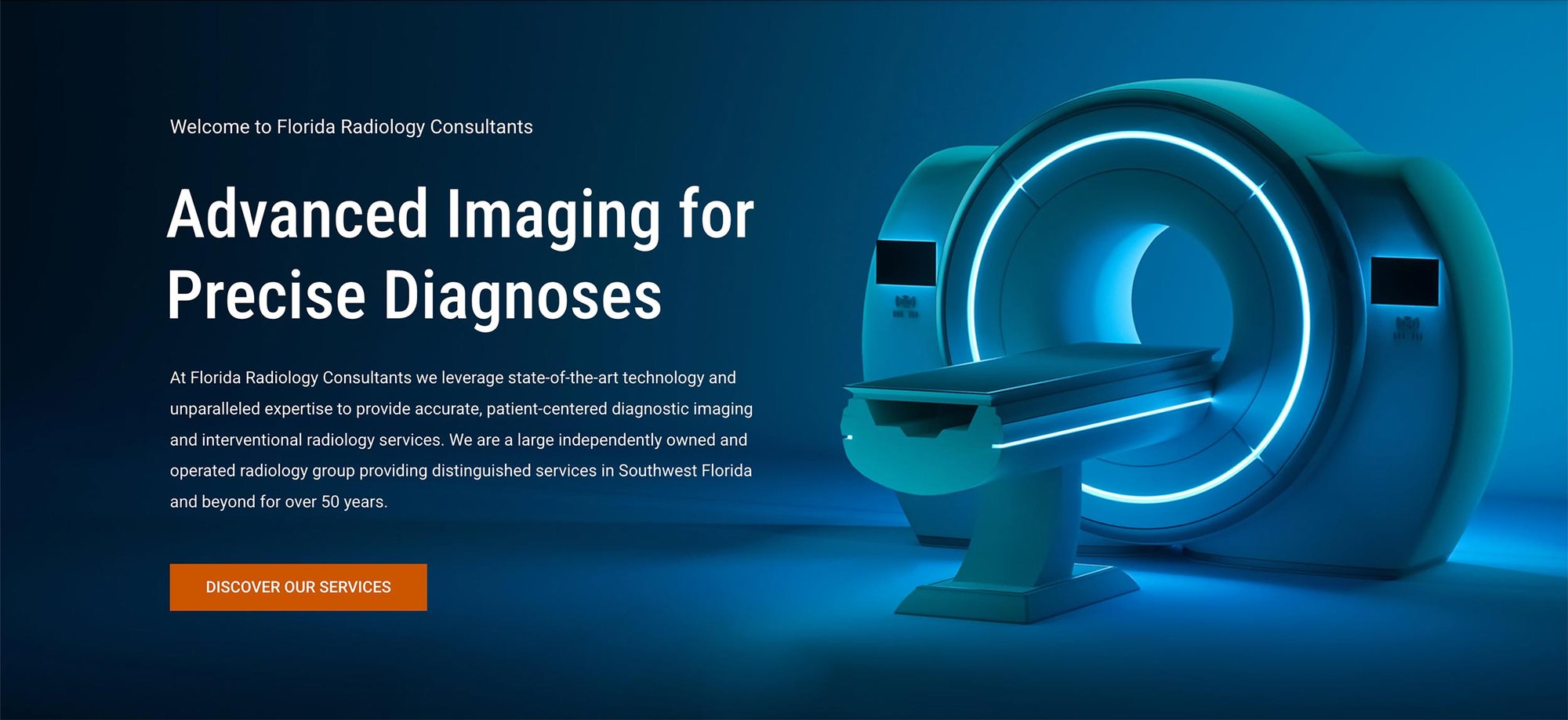
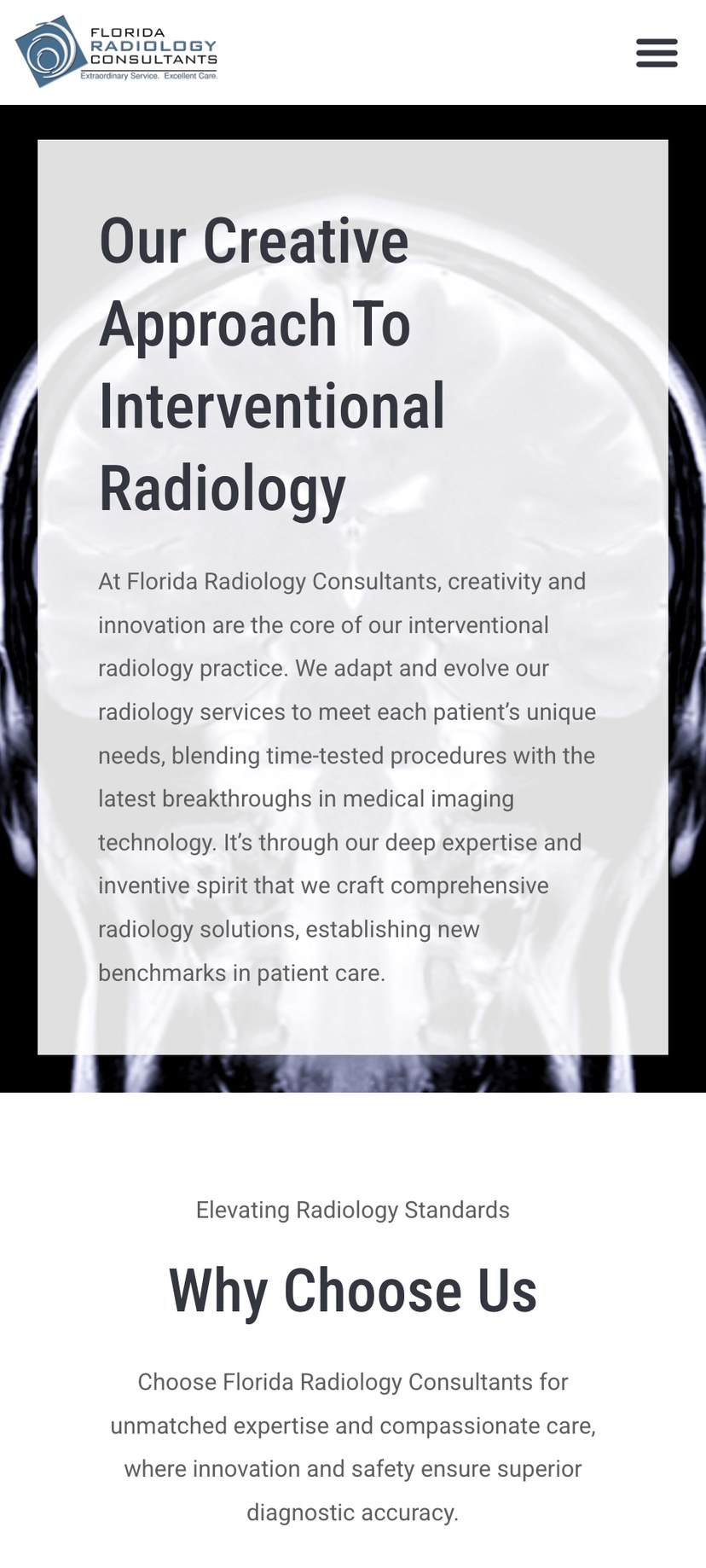


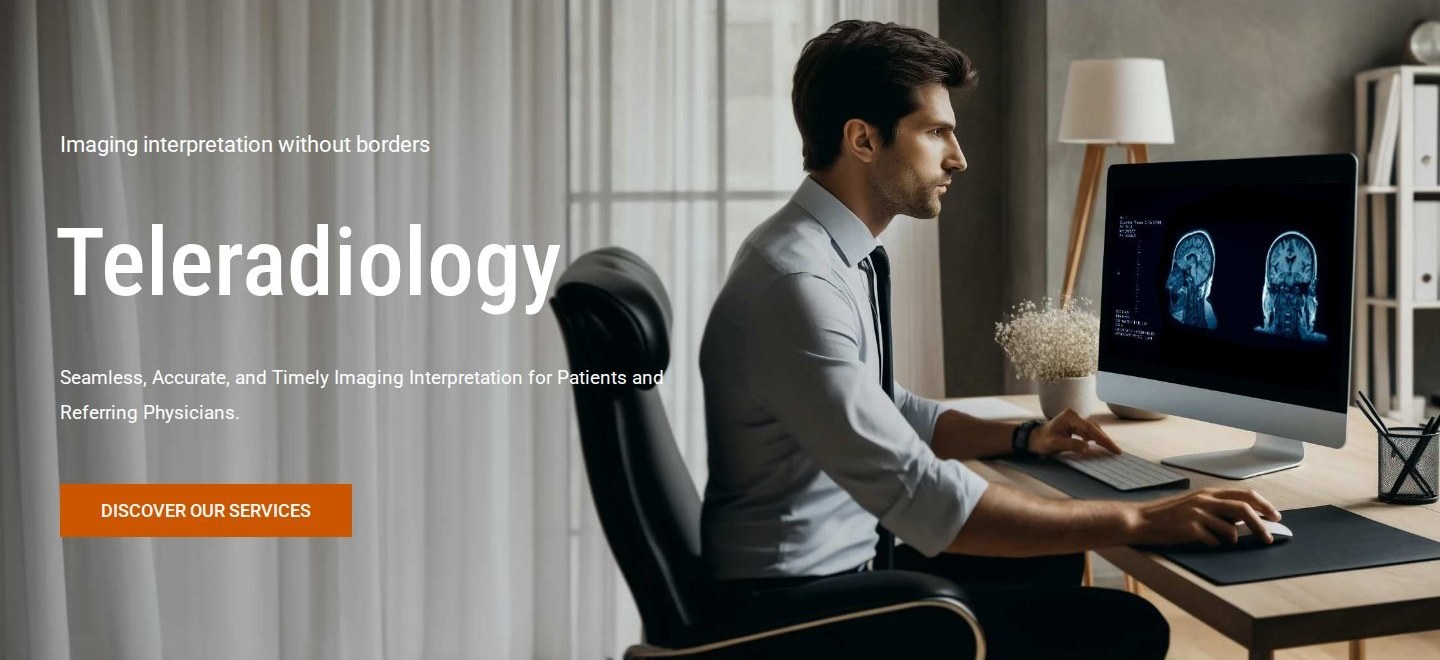
What a radiology website does
Most radiology patients are sent by their doctor, and that changes what the website has to do.
Referred patients still look the group up before they arrive. They want to know where they’re going and who they’re seeing, and the website is often the first look at the group they get.
Some patients look the group up after the visit. At a hospital-based group, patients rarely meet the radiologist who reads their scan, and the first time many of them see the group’s name is on a bill. They search for it to find out who the group is and how to pay. A billing page that is easy to find from the homepage answers them.
Interventional radiology is where patients choose. Someone weighing prostate artery embolization or uterine artery embolization against surgery reads the procedure pages, compares groups and decides where to go. A procedure explained clearly, in words a patient can follow, brings that patient to the group.
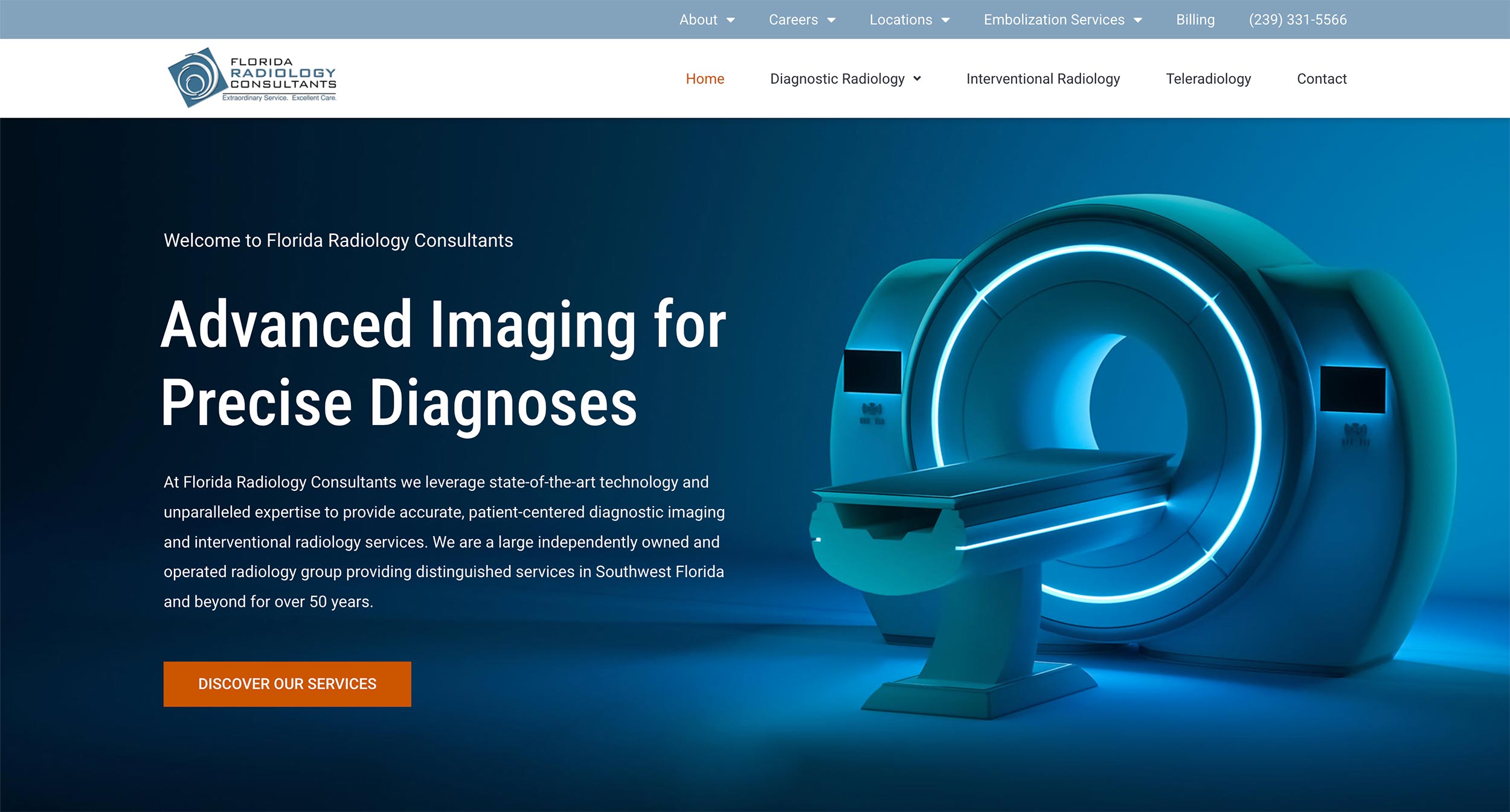
The Florida Radiology Consultants homepage. See the case study →
Four audiences
A radiology website works for four audiences at once.
Referred Patients
Their doctor chose the group. They look it up to see where they are going and who they will see, and to feel confident before the appointment.
Referring Physicians and Partners
A physician deciding where to send a case, or a group weighing a partnership, reads your site as a proxy for the practice. It shows them how organized you are and how easy you are to work with.
Radiologist Job Candidates
Radiologists are in short supply, and a candidate checks a group’s website before applying. They look for the subspecialties, the case mix, the call schedule and where the group is headed.
Interventional Radiology Patients
IR is one of the few parts of radiology where patients research a procedure and choose where to have it. The group that explains the procedure clearly is part of that decision.
What a radiology group needs to get right online.
- 01
A website built for the people your group most needs to reach.
- 02
Procedure pages patients find when they research care.
- 03
Accurate Google listings for every location patients visit.
Radiology Website Design and Professional Credibility
A radiology group is usually complex. The website’s job is to make it easy to understand. A well-built radiology website shows right away what the group does, which subspecialties it covers, where it works and how it is run. A referring physician should find the right subspecialty in a click, a job candidate should see what kind of place it is to work, and a patient should find the doctor they are being sent to.
The design should feel like the group. The look of the site, the photography and the words should give people an accurate sense of the group before they meet it, including what it values. These moving words from Dr. Emmanuel Magara, one of the group’s radiologists, were meant for another page on the Florida Radiology Consultants site: “At our practice, we understand that each medical image represents a real person with family, loved ones, concerns, hopes, and a desire for better health.” When I read them, I knew they belonged on the homepage, where every visitor would see what the group stands for.
On the diagnostic side, referring offices come first. They need to see which studies the group reads, where each kind of imaging is done, how results reach them and who to call with a question. For a group that reads for hospitals and imaging centers, those pages matter as much as anything else on the site.
For an interventional practice, the procedure pages do the most work. Each one explains what the procedure is, who it helps and what to expect, in words a patient can act on. For Florida Radiology Consultants, I built more than thirty procedure pages and more than seventy annotated imaging graphics, each one built with one of the group’s physicians. The first page was built with one of its interventional radiologists, and it became the template for the rest.
Radiology imagery belongs on a radiology site. The procedure pages carry the group’s own scans, and the rest of the site uses carefully chosen imaging photography, so a radiologist feels at home and a patient sees the precision behind the work.
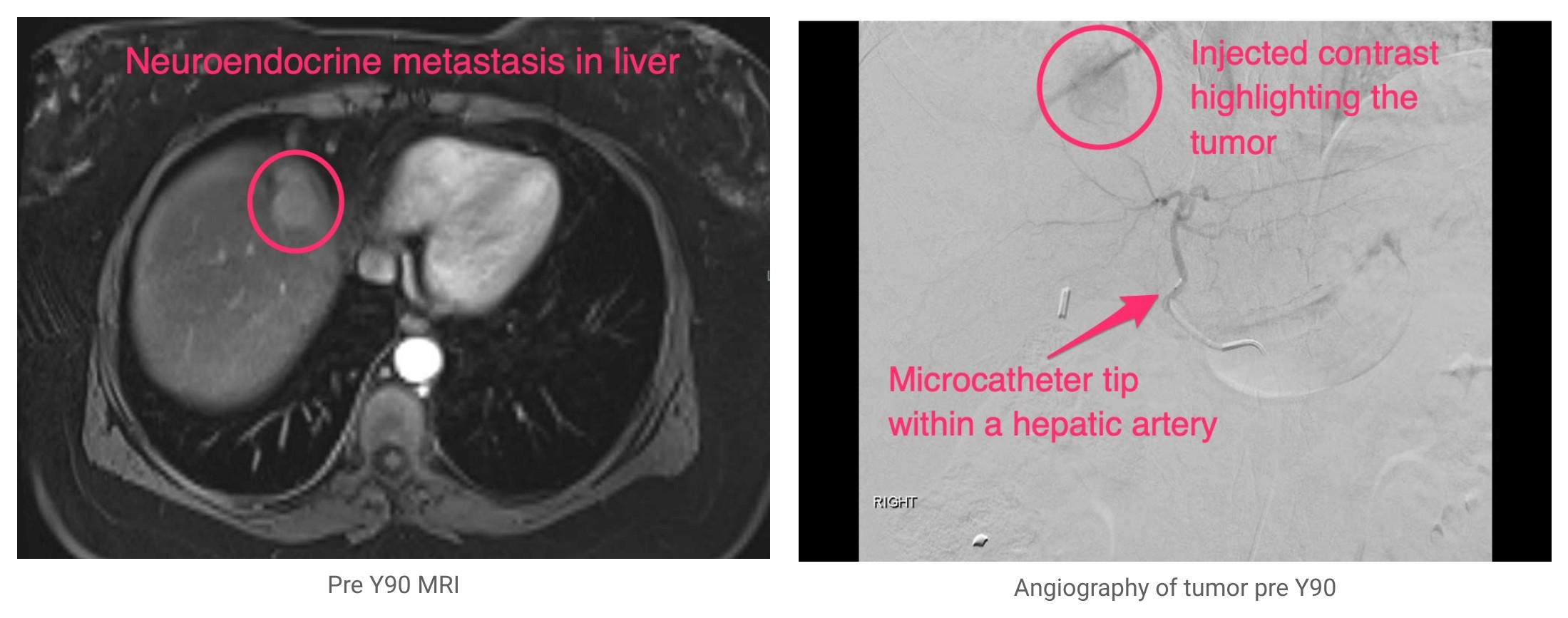
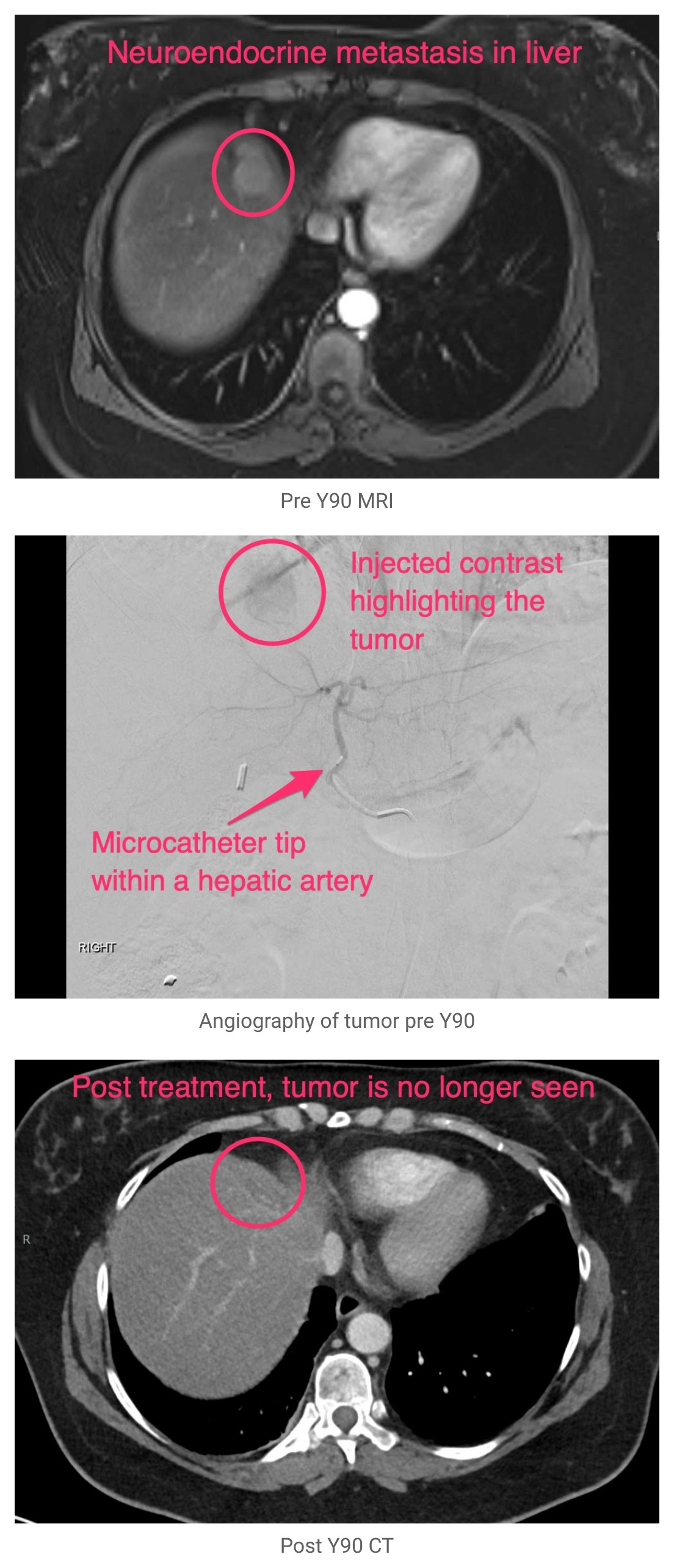
A procedure page on the Florida Radiology Consultants site, with the group’s own imaging, annotated. See the case study →
Some of the most useful pages on a radiology site never show up in Google. A patient might get a link to prep instructions before an MRI or a procedure, or to recovery instructions after one. A referring office might get a link to an order form. I build these pages along with the rest of the site.
For most groups, recruiting is an urgent job. Radiologists are in short supply, and candidates look at a group’s website before they reach out. The Florida Radiology Consultants site has a careers section with its own job board, an application form, and a page about living in Southwest Florida, written for a candidate who has never considered the region.
Hospitals and practices look at a group’s website before they talk about a partnership. They want to see how strong its radiologists are and how well the group is run. A profile page for each radiologist and a page for each subspecialty show them that, and a page about partnering with the group tells them what working together would look like. A group that offers teleradiology also needs a page that tells a hospital or imaging center what coverage it provides and how it works.
Most radiology groups already have a website, so this work often starts as a website redesign, and a careful one keeps the Google rankings the old site has earned. I rebuilt the Florida Radiology Consultants site on a new domain, and the old address forwards to it.
I can build this for your group. I plan the site, write the pages with input from your radiologists and design it myself, so referring offices, candidates, partners and patients each find what they need.
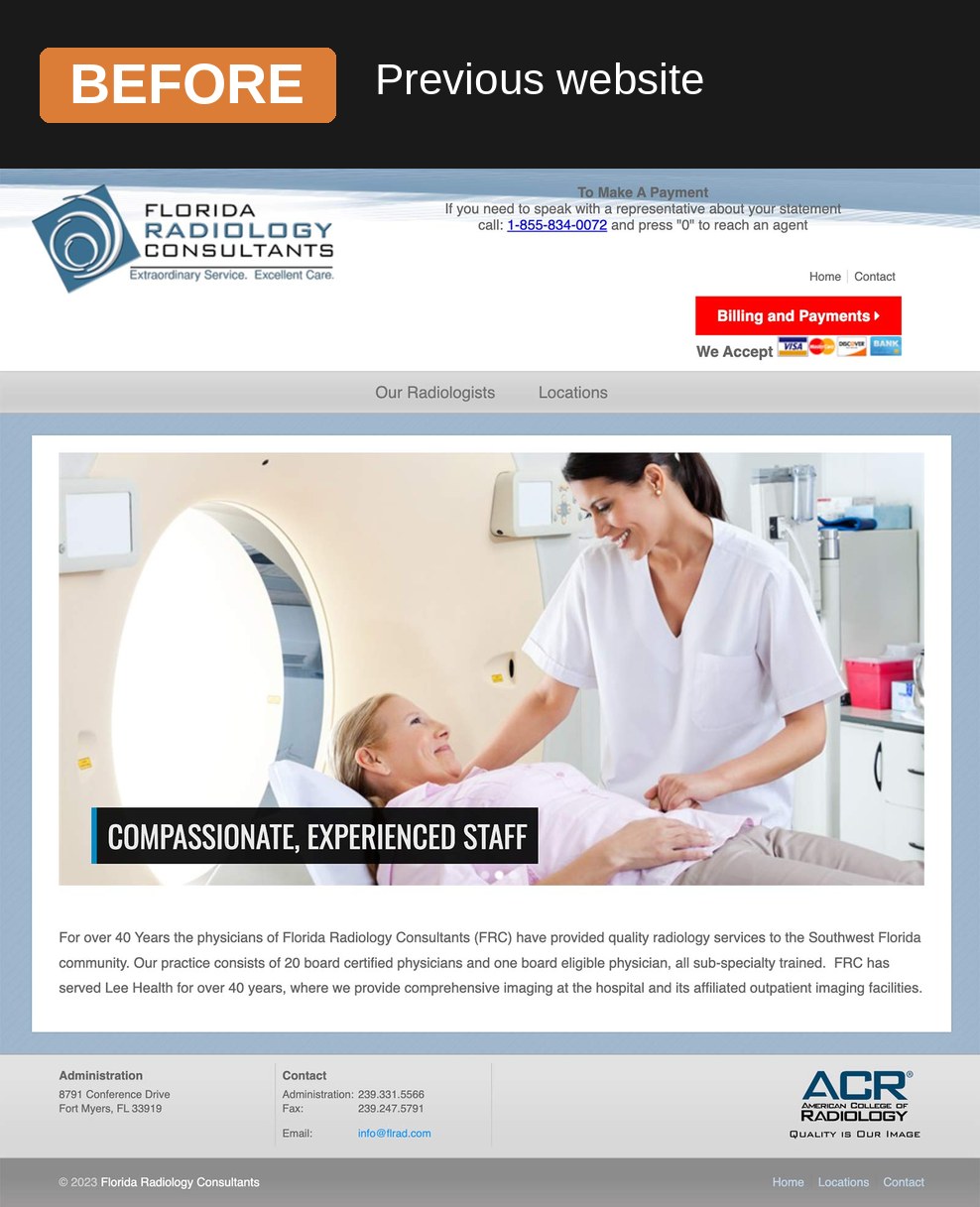

Before: the group’s previous website. After: the site I rebuilt. See the case study →
Radiology Marketing and SEO
Radiology SEO starts with who is searching. Referring physicians look up a group they haven’t worked with. Radiologists research where to work. Hospitals and practices look into a partner. Patients look up the doctor they are being sent to, or a procedure they are weighing.
Radiology marketing, and SEO in particular, puts the group in front of each of them. Each physician gets a profile page built to be found by name. Each procedure gets a page built around what patients search. And each opening on the job board is structured so it is eligible for Google’s job results.
The physician profiles draw the most clicks. On the Florida Radiology Consultants site, the profile pages have drawn more than 15,000 clicks from Google, more than any other part of the site. A referred patient checks the doctor they are being sent to. So does a candidate, and so does a partner. The procedure pages have drawn more than 6,400 clicks from patients looking into a procedure.
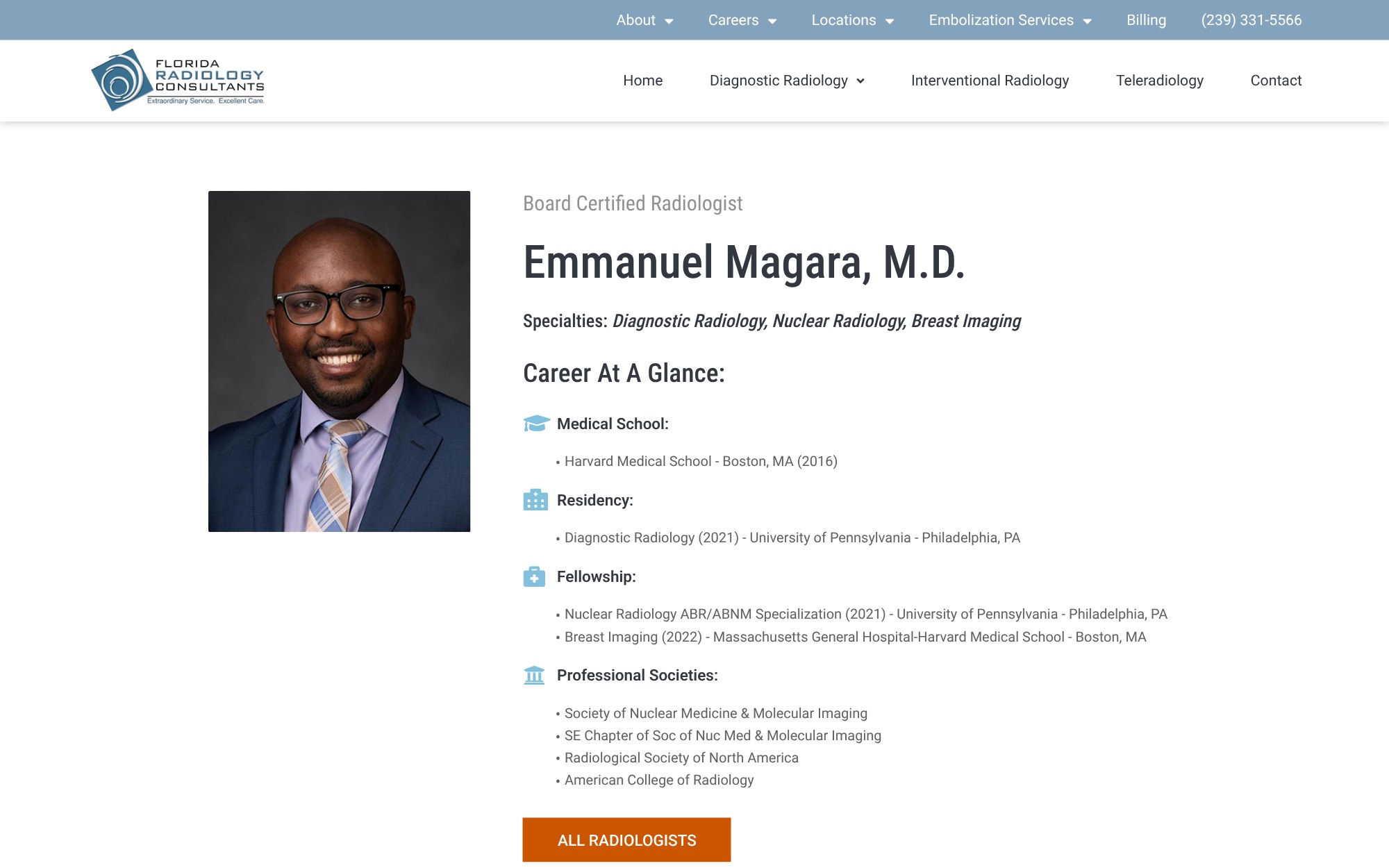
A physician profile page on the Florida Radiology Consultants site. See the case study →
I build these pages for your group and keep adding to them, so a new radiologist has a profile page and a new opening is on the job board soon after you send it.
The method is the same healthcare SEO work I do for every specialty, and that page covers how it changes when a site’s first job is hiring.
Local SEO for Radiology Practices
Local search plays a smaller role in radiology than in most specialties, because most radiology is physician-directed. Referred patients still look the group up before they arrive. They confirm the address, check the reviews and form a first impression, so the listing has to be right.
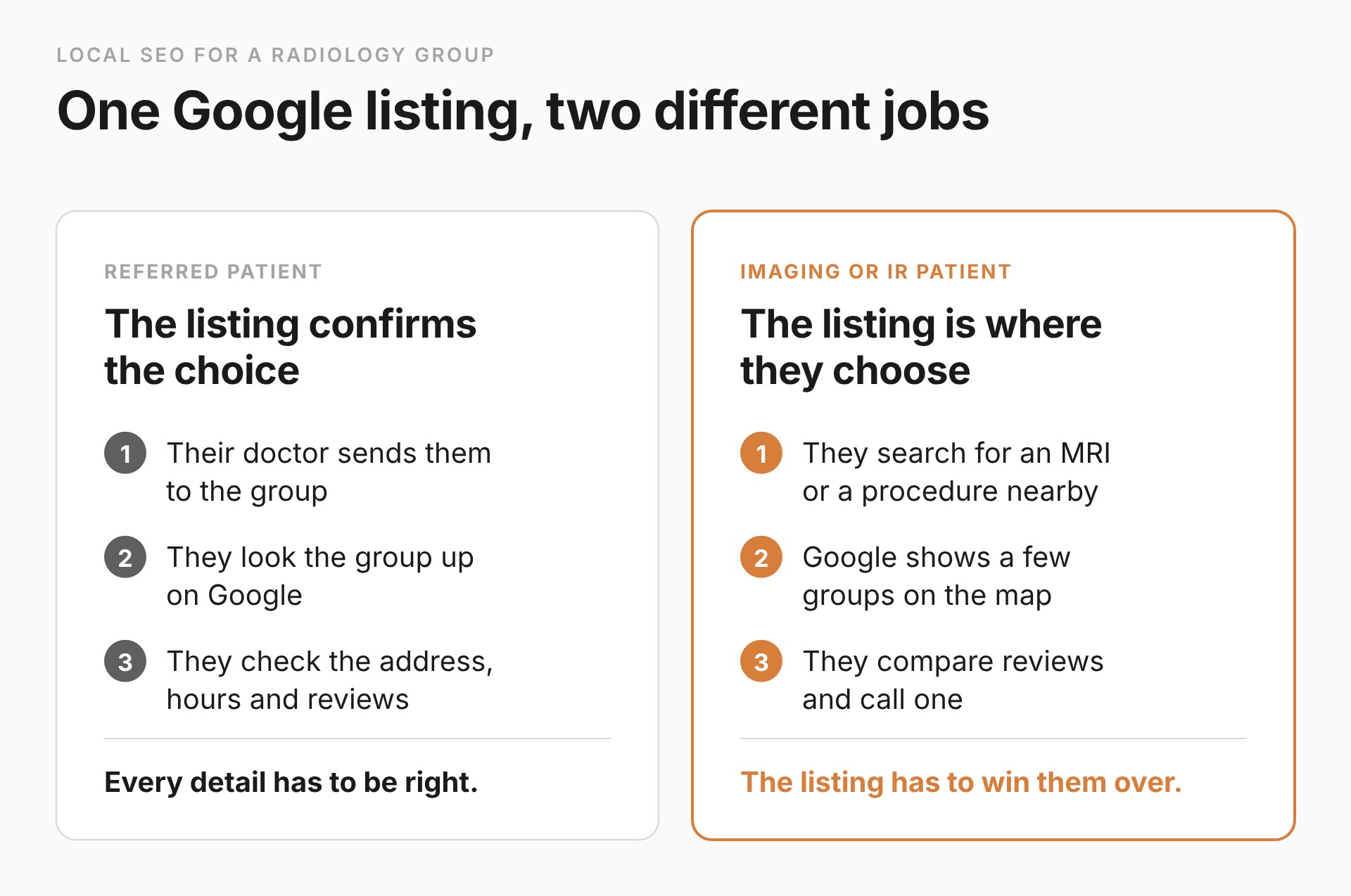

For IR practices and outpatient imaging centers, local SEO does more. IR patients searching for specific procedures or second opinions nearby are making active decisions. Patients scheduling routine imaging such as mammograms, MRIs, and X-rays often have real latitude in where they go and will search based on convenience and availability. In both cases, showing up in the map is what puts the practice into that decision.
Florida Radiology Consultants runs its own outpatient lab in Bonita Springs, where patients can have prostate, uterine and knee embolization without a hospital stay. The lab has a page of its own, tied into the rest of the interventional pages.
I set up and look after your Google listings, from the group’s profile and each imaging location to each radiologist’s own listing, and I keep them accurate as people join and offices change.
Structured Data for Radiology Practices
Structured data is code that states the key facts on your website in a way that’s made for search engines and AI tools to understand. It spells out who your radiologists are, which procedures they perform and where, so they get those facts right. It is written in a shared language called Schema.org, which Google and Microsoft both read, and AI tools can read too.
For a radiology group, structured data adds up to a map of the whole group. A group can have many subspecialties and locations, diagnostic and interventional work, and many radiologists under one name. The map connects each radiologist to their subspecialty, and each procedure to the doctors who perform it and the places it is done. People understand a map by looking at it. Search engines and AI tools read this one in code, and it is called a knowledge graph.
For an interventional practice, the map helps search engines connect a patient searching for PAE or uterine artery embolization with the right procedure page.


What the knowledge graph I built for Florida Radiology Consultants covers, across more than 130 pages. See the case study →
Structured data matters for recruiting too. Job listings built with it are eligible to appear in Google’s job results, in front of candidates who are actively looking. Every opening on the Florida Radiology Consultants job board is built this way.
Most radiology groups have only basic structured data on their websites, usually little more than the group’s name, address and phone number, or none at all, even when the group itself is large and complex. A group that describes itself fully is ahead of most of its competition. As AI systems get more capable, they will rely more and more on the code behind a website. Every website I build comes with a full knowledge graph, and I keep it current as radiologists join and procedures are added. If you already have a website, I have options for adding one.
The schema and knowledge graphs page shows how a graph like this is built for a medical group.
AI Visibility for Radiology Practices
More patients, physicians and candidates now take their questions to AI tools like ChatGPT, Claude and Perplexity. For radiology, that shift reaches every audience the group serves.
A patient who just received a concerning diagnosis might ask an AI what it means and where to go for a second opinion. Someone researching PAE or UFE as an alternative to surgery is doing the same. Referring physicians, practice administrators, and potential partners are using AI to understand groups they aren’t familiar with, asking about subspecialties, capabilities, and who handles specific types of cases. A radiologist considering a career move might ask which independent practices are worth looking at in a given region.
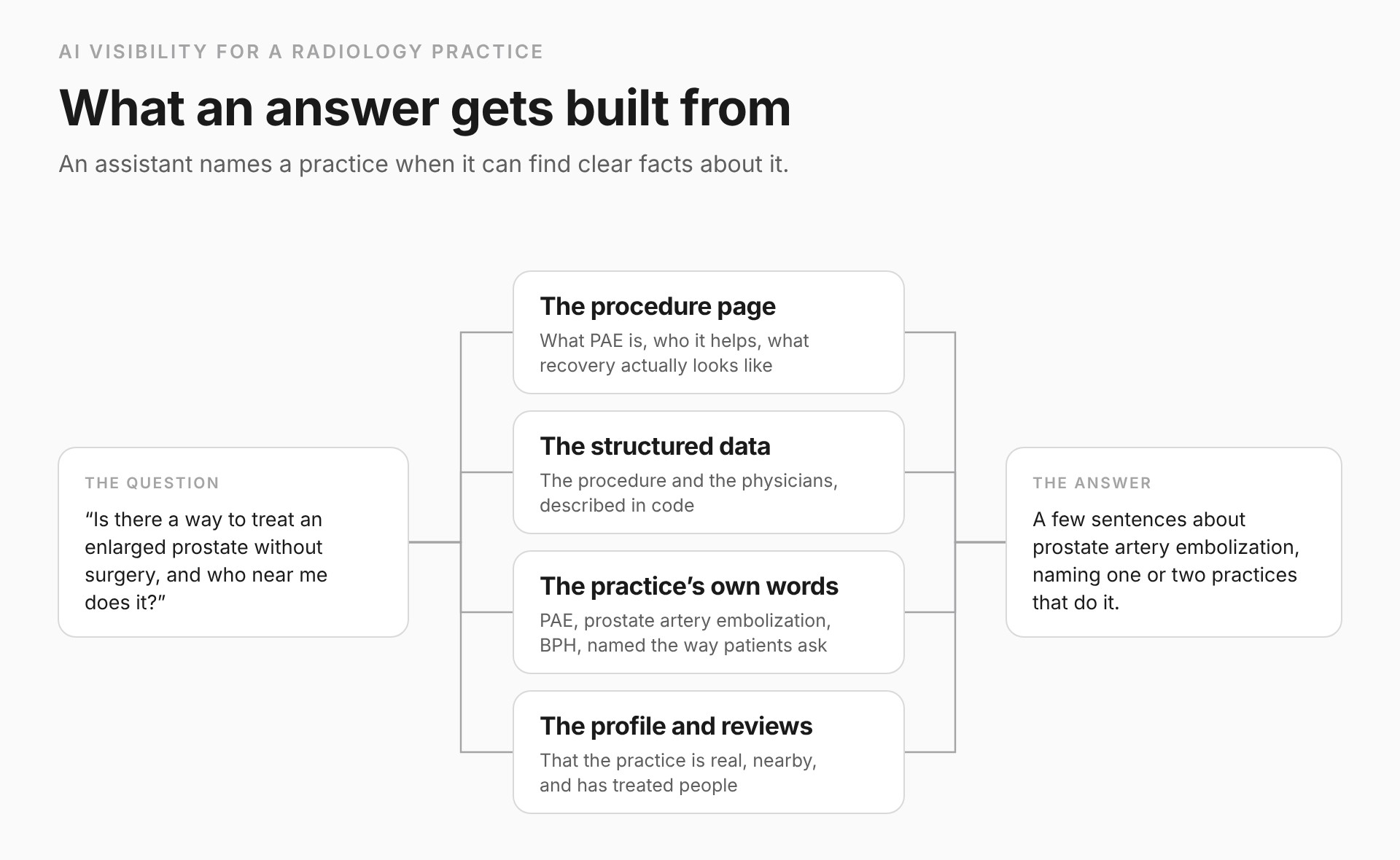
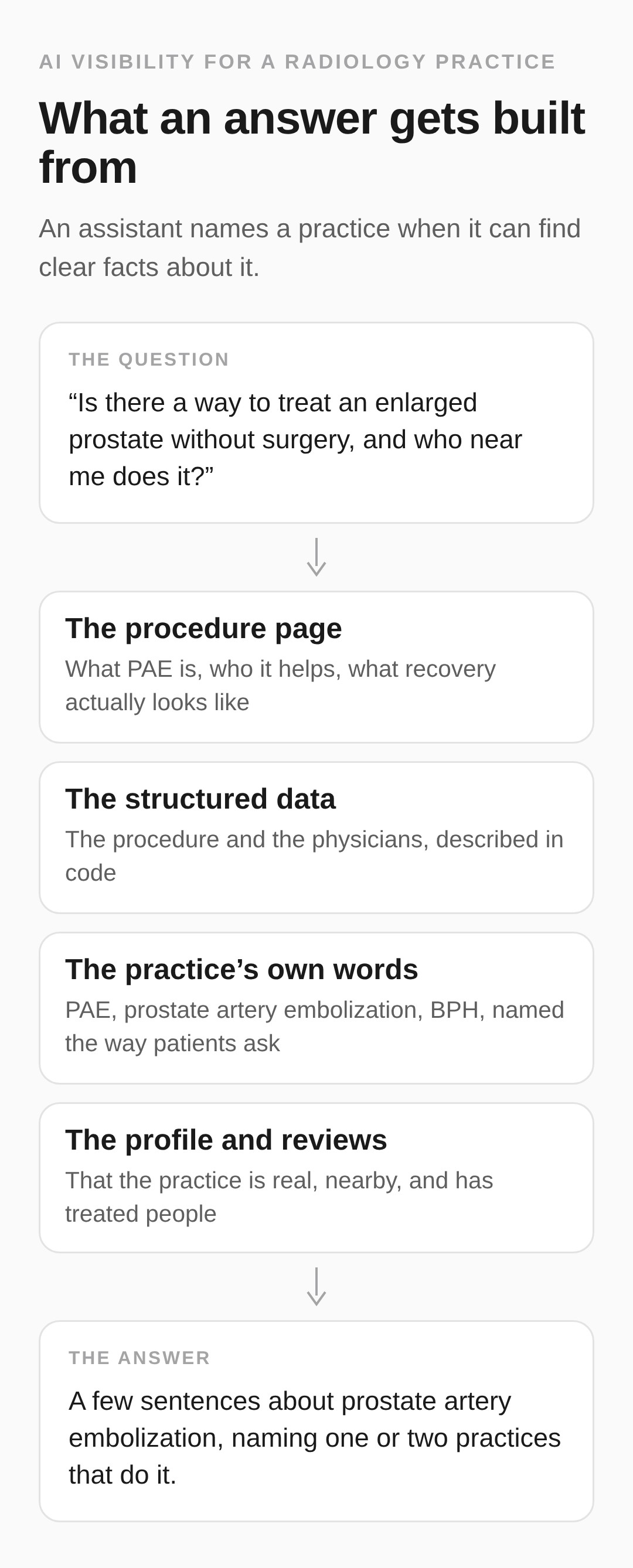
How an AI answer about prostate artery embolization comes together.
The practices named in those answers are the ones whose pages, profiles and structured data say clearly what they do.
Starting early on AI search optimization is an advantage. AI search optimization means working on what these tools draw on: the group’s pages, reviews, listings and knowledge graph. These tools favor groups that are well established online, and that takes more than the right pages. It takes time for reviews to add up, for other sites to mention the group, and for search engines and AI tools to come to trust it. A group that waits can build the same pages later, but it can’t make up that time. A group that starts now will also be in a much better position as more patients, physicians and candidates move from Google to AI. I do this work for you as part of your SEO, and I check regularly how ChatGPT, Google’s AI and other tools answer questions about your group, its procedures and its radiologists.
The AI search optimization page covers how, starting with an AI Visibility Audit.
One Person, Everything Connected
Radiology marketing usually gets split among several vendors. A radiology digital marketing agency handles the search, another firm built the website, and someone else keeps the job listings. You end up explaining your group to each of them separately. Because no one sees the whole picture, the details stop matching. A new radiologist shows up on the website but not on the Google listing, or a job posting still lists an office that has moved. Having one person handle all of it is a big advantage, because everything stays consistent. When a radiologist joins or an office moves, one person updates the website, the Google listing and the job board together.
For radiology website design, that one person is me. I design the site, write the pages, do the SEO and build the structured data, so every decision is made with radiologists, partners and patients in mind.
It also gets better over time. I come to know your group, your radiologists and how you like things done. You don’t have to explain the background again each time, because I already know it. A short note is enough, and the work gets done.
That is how I work with Florida Radiology Consultants. I host the site and build what the group sends me, from new doctors to new procedure pages. When a radiologist joins, their profile page usually goes up the same day or the next.
Independent radiology groups have a story to tell, and it’s a strength. Consolidation is the norm in radiology, and you may be competing with national groups backed by private equity, with large recruiting budgets. But you have your own advantage: your group is run by its own radiologists. That independence is what makes it a good place to work. Radiologists want a say in how they practice and colleagues they know. Nobody wants to feel like just a number. I help show radiologists, referring doctors and patients who you really are.
Related
Web design and development
How a site gets structured before it gets designed.
Website redesign
Rebuilding a practice site without losing its rankings.
Healthcare SEO
How patients search for care, and the work that answers it.
Florida Radiology Consultants
30+ radiologists joined since 2024.
See my work
Every case study, with the evidence.
Radiology experience
Florida Radiology Consultants: an independent, physician-owned radiology group in Southwest Florida, and the exclusive radiology provider for Lee Health.

The Rebuild
A full rebuild on a new domain, around what the group needed most: radiologists and partners. A careers section with its own job board, a page about living in Southwest Florida, and every opening structured for Google’s job results.

The Interventional Radiology Section
More than thirty procedure pages, written so a patient can act on them, with more than seventy annotated imaging graphics, each one built with one of the group’s physicians.

What Happened After
More than 30 radiologists have joined since 2024, and the pace of hiring more than doubled after the job board went live. The procedure pages bring patients in from Google.
A few common questions
What radiology groups ask before we start.
The questions I hear most from practice administrators and physician leaders. If yours isn’t here, ask it on the contact page.
What does a radiology practice actually need a website for?
More than most practices realize. Even when nearly every patient is referred, the website does several jobs at once.
Referred patients still look you up before they arrive. They want to confirm where they’re going, understand who they’re seeing, and feel confident about the care they’re about to receive. That first impression often shapes their expectations before they walk in.
Referring physicians use the site differently. They need to understand your subspecialties, your scope of care, and how to send a patient quickly. If that isn’t clear, the referral goes somewhere else.
The radiologist shortage makes talent acquisition a real priority. Candidates research practices before reaching out, and a site that communicates your culture, subspecialties, and growth trajectory gives the right people a reason to consider you.
For interventional radiology, the role expands further. Patients research IR procedures online, compare options, and reach out to practices whose sites give them confidence. In those cases, the site is part of the decision directly.
A good radiology website does all of these jobs on one site.
What should a good radiology website include?
A good radiology website needs to serve multiple audiences clearly. Structure is what makes that possible.
At minimum, the site should include a clear overview of the practice covering what it does, what subspecialties it covers, and how it’s organized. Provider pages should go beyond credentials and communicate each physician’s subspecialty focus in terms a referring physician or patient can understand. For diagnostic practices, that clarity helps referring physicians route cases appropriately. Location and contact information needs to be accurate and easy to find.
The referral process deserves its own dedicated section. Referring physicians need to be able to act quickly, and a buried or unclear referral pathway slows a busy physician down at exactly the wrong moment.
For IR practices, procedure pages are essential. Each procedure should be explained in plain language: what it is, who it helps, and what to expect. Supporting imagery that helps a patient understand what they’re looking at makes those pages significantly more effective.
A careers section matters more in radiology than in most specialties. Given the shortage of radiologists and the competition for talent, a site that presents the practice’s culture, subspecialties, and growth trajectory alongside a structured job board gives candidates a reason to reach out.
For outpatient imaging centers, scheduling information and insurance details belong on the site as well. Clear navigation and readable text are practical requirements throughout. A meaningful portion of radiology patients are older and looking for straightforward answers quickly.
On the Florida Radiology Consultants site, every physician has a profile page, each subspecialty has its own page, and partners have a page of their own.
How can SEO benefit a radiology practice?
SEO helps a radiology group be found by everyone who chooses it: referring physicians, candidates, partners, and patients looking into a procedure.
For most radiology practices, the biggest SEO opportunity is being found by the people who evaluate and choose a group for reasons other than their own care: referring physicians researching groups they haven’t worked with, administrators exploring partnerships, radiologists looking for their next position. When a practice’s site clearly defines its subspecialties, procedures, and providers in terms search engines can understand, it shows up in those searches.
For IR practices, SEO extends into direct patient acquisition. Procedure-specific pages built around what patients actually search, including PAE, UFE, tumor ablation, and second opinion radiology, connect the practice to patients who have already decided they want a specific procedure and are looking for where to go.
The goal is to be found by the right people when they are making the decisions that matter to the group: referrals, hiring and growth.
What radiology marketing strategies actually work?
The ones built around how a radiology group is actually chosen. The website has to read as credible to referring physicians and hospital partners. Interventional practices need procedure pages a patient can act on. A careers section with structured job listings reaches the radiologists who are looking. Outpatient imaging centers need accurate listings, because their patients do choose. And structured data helps search engines and AI tools understand a complex group. Social media and paid ads rarely move the needle for a group whose patients are referred.
What is local SEO for radiology practices?
Local SEO determines whether your practice shows up when someone nearby searches for radiology services.
For referred patients, it matters after the referral. They look the group up to confirm the address and check the reviews.
For outpatient imaging centers and IR practices, local SEO plays a more direct role. Patients scheduling a mammogram, an MRI, or an IR consultation often have real latitude in where they go and will search based on convenience and proximity. Showing up in the Google map for those searches is how the practice enters the decision.
The foundation is an accurate Google Business Profile, consistent information across the web, and a radiology website that reinforces all of it. The goal is that anyone who looks the group up finds it quickly and finds every detail right.
How can a radiology website help with physician referral marketing?
Physician referrals are the primary driver of patient volume for most radiology practices, which means radiology marketing starts with the referral relationship. The website is central to it.
When a physician is deciding where to send a patient, they’re looking for clarity. What subspecialties do you cover? What types of cases do you handle? How do I refer a patient? If those answers aren’t obvious, the referral often goes somewhere else.
A well-built radiology website removes that friction. It presents subspecialties clearly, outlines capabilities in a way that’s easy to scan, and provides a straightforward referral process with clear instructions or a dedicated form.
For physicians who don’t already have a relationship with your group, the website becomes the proxy for that relationship. It’s how they judge whether your group is organized and easy to work with. For practices building new referral relationships, radiology website design and SEO work together as a business development tool. A physician who finds the practice through search and likes what they see is more likely to route a case their way.
How do you attract radiologists in a competitive hiring market?
Radiologists look closely at a group before they apply.
They’re looking at subspecialties, case mix, autonomy, call structure, and where the group is headed. They’re also evaluating lifestyle, especially if the position requires relocation. In many cases, the website is the first place they go to get that picture.
A strong radiology website makes those factors clear. That means going beyond a basic job listing. A well-built careers section presents the structure of the group, the types of cases handled, and the direction of the practice. It also gives candidates a sense of what it’s like to live and work in the area, something that often matters as much as the position itself.
Structured job listings extend that reach. When positions are published with structured data, they become eligible to appear in Google’s job results, putting openings directly in front of candidates who are actively searching.
In a market where practices are competing for the same limited pool of candidates, radiology website design and SEO can be a real differentiator. For Florida Radiology Consultants, more than 30 radiologists have joined since 2024, and the pace of hiring more than doubled after the job board went live.
Do you work with interventional radiology practices?
Yes. IR practices have needs of their own.
IR is one of the few areas in radiology where direct patient acquisition applies. Patients research PAE, UFE, tumor ablation, and other procedures online before they ever contact a practice. They’re often looking for an alternative to surgery and comparing their options carefully. A well-built IR website with clear procedure pages written in language that’s accessible without losing accuracy, and supporting imagery that helps patients understand what they’re looking at, gives the practice a real presence in that decision.
The work for Florida Radiology Consultants covers the full picture for an IR practice: more than thirty procedure pages built around what patients search, annotated imaging made from the group’s own cases, an outpatient lab with a page of its own, and a careers section built to recruit. In 2026, as the group expanded its embolization services, I built a new section for prostate, genicular and uterine artery embolization.
If you run an IR practice and want a web presence built around what IR patients actually need, let’s talk.
How does structured data help a radiology practice?
Structured data is code added to a radiology website that describes your practice in exact terms search engines and AI systems can read and act on. A radiology practice might list everything it does on its site and still be unclear to search engines about how the pieces connect. Structured data defines those relationships explicitly.
At the practice level, it identifies your organization, locations, and providers with precision, connecting each physician to their subspecialty and credentials.
For IR practices, structured data makes procedure pages more effective. When a page about PAE or UFE includes structured data, search engines can identify it as a medical procedure page, understand what it treats, and connect it to relevant patient searches with more confidence.
For recruitment, structured data on job listings makes positions eligible for Google’s job results.
As AI tools get more capable, they will rely more and more on this code, and a group that has described itself well will be ready for them. Every website I build comes with a full knowledge graph.
Do you offer radiology website design and SEO for practices outside of Denver?
Yes. Florida Radiology Consultants is in Fort Myers, Florida, and I work with practices across the country. Website design, SEO, structured data and ongoing support are all handled remotely, and we meet by video.
What matters more is understanding how the practice operates, what it’s trying to achieve, and how its web presence needs to support those goals. Once that’s clear, the work translates the same way whether the practice is in Colorado or anywhere else.
Will you write the content, or do we have to?
I’ll write it. I can write every page from scratch, but I’d rather start with what your radiologists know, because no one understands your procedures and your group better than they do. They don’t have to write anything polished. A few notes or a bulleted list is enough, and I turn it into the pages. Setting the group’s voice is part of building the site. Early on, I settle on a voice for the group, or capture the one it already has, so the patient pages and the recruiting pages sound like the same group. Every page goes to your physicians for review before it goes live. For Florida Radiology Consultants, one of the group’s interventional radiologists read and edited the procedure pages, and the doctors who lead each subspecialty supplied quotes for their own pages. Your group can be as involved as it wants to be.
How quickly can a new radiologist be added to the site?
Usually the same day or the next. When Florida Radiology Consultants sends me a new radiologist, I build the profile page and add them to the group’s list of physicians as soon as I have their details.
What happens if you're unavailable?
I travel with my laptop, so if something urgent comes up, I can handle it from wherever I am. Your website runs on managed hosting with daily backups and a support team available around the clock, so the technical safety net doesn’t rest on one person. You own your domain, your website and your logins, and if you ever needed someone else to step in, I’d give you everything they need. I typically respond to requests quickly, and some of my clients have been with me for more than ten years. At an agency, the person who knows your group can leave. With me, it’s always the same person.
Do you work with my competitors?
No. I won’t work with a radiology group that competes with one of my clients in the same area, whether for patients, referring doctors or radiologists. If you’re my client, I’m on your side, and I want you to win. I do work with groups in other areas, but never two competing in the same market.
Next specialty
Functional Medicine
More specialties

Get in touch
If your radiology group is better than its website shows, I can help.
Tell me what your group does best and who you want to reach, and we’ll both get a sense of whether we’re the right match.